

How Long Does It Take to Get Dentures? A Realistic Timeline From First Visit to Final Fit
You have decided it is time for dentures, or someone you love has, and the practical question lands right away. When will I actually have teeth again? People ask it because they have an event coming up, a job interview, a family visit, or simply because they are tired of eating soft food and covering their mouth when they laugh.
The honest answer is that it depends on your mouth, and the biggest variable is usually healing. If you already have healed gums, a new set can come together over a handful of appointments. If teeth need to come out first, the calendar stretches, and an immediate denture can bridge that gap. This guide walks through each stage in order, what shapes the pace, and how to avoid the delays that catch people off guard.
This is general education, not a diagnosis or a promise about your own schedule. Your timeline depends on your gums, your health history, the type of denture and the appointments you can make, so use this to prepare for a conversation with the denturist or dentist who will assess your mouth.
The Short Answer: How Long Does It Take to Get Dentures?
Getting dentures usually takes several weeks and several appointments from the first assessment to the final fit. If your gums are already healed, the process is often shorter. If teeth need to be removed and the gums need time to heal first, it can take a few months, which is why some people choose immediate dentures placed on extraction day.
You will see published ranges that look quite different from one clinic to the next, from as little as two to four weeks for a set made after healing, up to several months when extractions come first. Neither is wrong. They describe different starting points and different ways of working, so treat any number you read online as a rough picture and ask your own provider for a schedule built around your case.
| Starting Point | What Usually Happens First | What Mostly Sets the Pace |
|---|---|---|
| No teeth left, gums already healed | Assessment, then impressions | Appointment spacing and lab fabrication |
| Teeth still present and need removal | Assessment, planning, extractions by a dentist | Healing time before final impressions |
| Teeth to be removed, no gap wanted | Impressions taken before the extractions | Planning, then adjustments as gums change |
| Replacing an old set | Review of the current denture and gums | Whether a reline, repair or full remake is needed |
| Dentures held by implants | Imaging, planning and implant placement | Implant healing before the final denture is attached |
If you want the other side of the story first, our guide on how long dentures last covers what happens years after the process described here.
The Denture Timeline Step by Step
Most people get dentures through a series of visits that build on each other. The names vary a little between clinics, and some steps combine into one appointment, but the order is fairly consistent. If you would like to hear how the clinic runs a first visit, our post on what to expect at your first denture appointment in Toronto goes into the details.
Step 1: The Assessment and Planning Visit
The first visit is mostly a conversation and an exam. A denturist looks at your remaining teeth, gums and the way your jaws meet, asks about your medical history and medications, and talks through what you want from the result. Bring a list of anything you take regularly, any previous dental records, and the questions you have been saving up.
This is also where the plan takes shape. You and the denturist decide whether a complete denture, a partial denture or an implant-supported option makes sense, and whether any teeth need to be removed first. The clinic’s website mentions a no obligation initial consultation, so ask about it when you book. An assessment is a chance to get information, and it does not commit you to a treatment.
Timing for this step is simple: it is one visit, and it can happen quickly if the clinic has an opening. It is also the point where you can learn whether the rest of your calendar will be short or long.
Step 2: Extractions and Healing, If They Are Needed
This is the stage that stretches timelines more than any other. When natural teeth are being replaced, they are removed by a dentist, and the gums and bone then need time to settle before a conventional denture can be measured accurately. The Canadian Dental Association describes conventional dentures as being made and inserted after the teeth have been extracted and the gums and jaw tissues have healed, and notes that the full healing period can take up to six months. You can read their overview on the Canadian Dental Association denture page.
Many denture providers allow somewhere in the range of several weeks of healing before taking final impressions, and then keep checking the gums as the shape continues to change. How long depends on how many teeth were removed, which ones, how you heal, and what your provider sees at each check. Our guides to how long a tooth extraction takes to heal and what to eat after a tooth extraction are helpful while you wait. The clinic also describes its tooth extraction service if you want to see how that stage is handled.
If you would rather not go without teeth during this period, that is where immediate dentures come in, and we cover them later in this article.
Step 3: Impressions
Impressions are the moulds, or in some clinics the digital scans, that capture the shape of your gums and the roof of your mouth. They are the foundation for everything the lab builds, which is why this visit is unhurried. Some providers take a preliminary impression first and a more detailed one at a later visit, using a custom tray made on the first model. If you want to know how scanning changes the routine, our comparison of digital vs. conventional dentures explains what is different.
Step 4: Bite Registration and Tooth Selection
At this appointment the denturist records how your upper and lower jaws relate to each other, how much space there is between them when you close, and where the front teeth should sit so your lips and speech look and feel right. You will also choose the shade and shape of the denture teeth. Take your time here. It is easier to talk about natural colour and size now than after the teeth are set in acrylic.
Step 5: The Wax Try-In
The try-in is a preview. The teeth are set in wax on a base so that you and the denturist can check the bite, the look, and how your speech sounds before anything is finalized. If something feels off, such as a tooth that looks too long or a bite that does not meet evenly, this is the moment to say so. Sometimes a second try-in is needed to settle the details, and that can add a short wait. It is a reasonable trade for a better final fit.
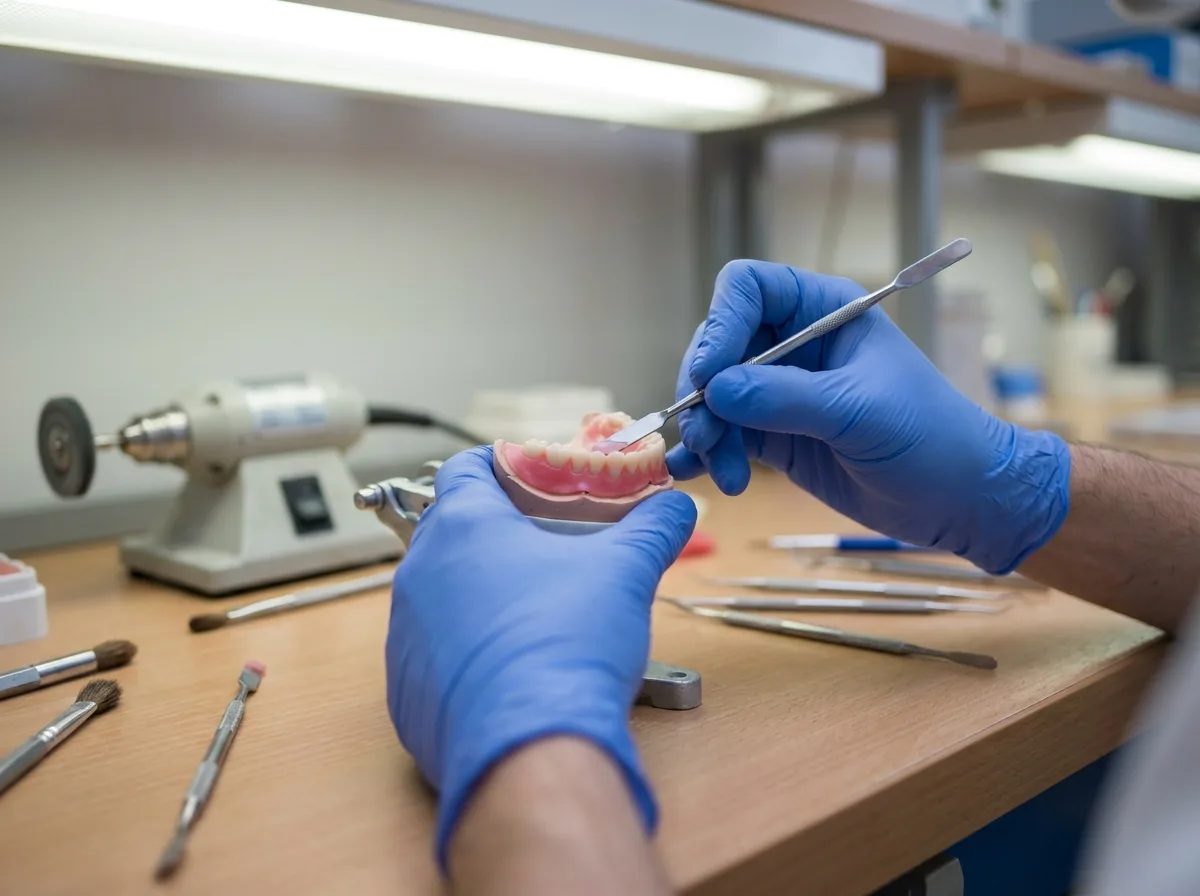
Step 6: Laboratory Fabrication
After the try-in is approved, the wax is replaced with the final denture base material and the case is finished. The clinic describes an in-house laboratory, which means the denture does not have to travel to an outside facility, and that can simplify coordination between the lab and the chair. Published turnaround times for this step vary widely, and the clinic will tell you what to expect for your case. The complete dentures page describes how the clinic makes full sets.
Step 7: Delivery and the First Fitting
At delivery, your denturist places the finished denture, checks the fit, bite and appearance, and makes any immediate adjustments. You will learn how to put the denture in and take it out, how to clean it, and when to wear it. Plan for this visit to feel a little strange. A new denture is a foreign object, and your tongue, cheeks and lips need practice. Our guide on how to care for new dentures once they arrive gives you a simple routine to start with.
Step 8: Follow-Up Visits
Almost everyone needs at least one adjustment visit in the first weeks. A pressure spot or a sore area is common and usually fixable in minutes. A follow-up is a normal part of the process, not a sign that something went wrong. Ask when the first check will be and how to reach the clinic if a spot is bothering you before then. Our article on adjusting to new dentures describes the first weeks and months in detail.
Timelines by Type of Denture
The type of denture changes the sequence, and sometimes the length of the wait. The categories below are the ones patients ask about most. For a broader comparison, our article on the difference between a complete and a partial denture is a good companion.
Conventional Complete Dentures
A conventional complete denture is made after the teeth have been removed and the gums have healed. The healing wait is usually the longest part of the timeline, and once impressions begin, the process often moves through a series of visits over several weeks.
This route tends to give the most stable starting fit, because the gums have already changed shape. The cost is the waiting period without teeth, unless you use a temporary option.
Immediate Dentures
An immediate denture is made before your teeth are removed and placed on the day of the extractions. You are not without teeth while you heal, though the denture will usually need adjustments and a reline, or eventually a new set, as your gums and bone change shape.
The Canadian Dental Association notes that during the healing period bones and gums can shrink and immediate dentures may need to be relined for a proper fit. That is a different timeline from a conventional set: shorter before you have teeth, but with more follow-up afterward. Our dedicated guide to immediate dentures in Toronto covers the before, during and after, and the clinic’s immediate dentures page describes the service.
Partial Dentures
A partial denture replaces some teeth and uses the remaining natural teeth for support. The appointment sequence looks similar to a complete denture, with extra attention to how the clasps or other attachments fit against your natural teeth. If a tooth has to be removed first, healing comes into the calendar as well. The partial dentures page explains how the clinic approaches them, and our article on flipper teeth covers a temporary option some people use while waiting.
Implant-Supported Dentures
Dentures supported by dental implants follow a much longer path because implants need time to integrate with the bone before a final denture is attached to them. How long that takes is decided by the clinician placing the implants, based on imaging and your healing. If you are comparing paths, start with our overview of dental implants vs. dentures and the clinic’s implant supported dentures page. Another route some patients ask about is covered in our guide to All-on-4 dental implants in Toronto.
Digital Dentures
Digital workflows use scans and computer design, and some providers say they reduce the number of visits. Whether it applies to you depends on the clinic’s equipment and your case, so ask what the process would look like and how it changes the schedule. We compare the two approaches side by side in the article linked above.
Relines, Repairs and Replacing an Old Set
If you already wear dentures and the fit has drifted, the path may be much shorter than a new set. A reline resurfaces the inside of the denture so it matches the gums as they are now, and a repair addresses a crack or a broken tooth. Some of this can be done quickly, and some needs a lab step, which your provider will explain. The denture relines page describes the service, and our guide to denture reline costs may help with planning. If a denture breaks suddenly, read our advice on dealing with a broken denture.
| Denture Path | Is a Healing Wait Involved? | Number of Visits | Main Question to Ask |
|---|---|---|---|
| Conventional complete denture | Yes, after extractions | A series of visits, confirmed by your provider | How long should my gums heal before impressions? |
| Immediate denture | No wait without teeth, but gums keep changing | Planning visits plus several adjustments | When will it need a reline or replacement? |
| Partial denture | Only if teeth are removed | Similar to a complete denture | How will it attach to my natural teeth? |
| Implant-supported denture | Yes, for the implants to integrate | More visits over a longer period | Who places the implants, and when is the denture attached? |
| Reline or repair | No | Often fewer | Can it be done the same day, or does it need the lab? |
What Makes the Process Faster or Slower
Three things shape the pace more than anything else: how your body heals, how the visits are spaced, and how complex the design is. Some of those you can influence, and some you cannot.
| Factor | How It Can Affect the Timeline | What You Can Do |
|---|---|---|
| Number and location of extractions | More teeth, or larger back teeth, can mean more healing time | Ask your dentist and denturist to explain the plan before extractions |
| How you heal | Healing speed varies from person to person | Follow aftercare instructions and report anything unusual |
| Appointment availability | Gaps between visits add up | Book the next visit before you leave, and bring a caregiver if scheduling is hard |
| Try-in changes | A second try-in adds a short step | Give clear feedback on look, bite and speech early |
| Lab workload and design | Complex cases take longer to make | Ask what is realistic for your design |
| Medical or dental health | Some conditions need attention before denture work | Share your full history at the first visit |
| Denture type | Implants and combined treatments add steps | Compare options before deciding |
| Transportation and mobility | Getting to appointments can be the real bottleneck | Ask about house calls if travel is a barrier |
Healing Is the Variable You Cannot Rush
It is tempting to hurry the healing stage, but pushing ahead before the gums have settled can lead to a denture that no longer fits a few weeks later. If a clinic says it can make a conventional denture right away after extractions, ask how it plans for the changes ahead, and whether a reline will be part of the plan.
Scheduling Is the Variable You Can Influence
Missed or delayed visits quietly add weeks. If you have a trip or surgery on the calendar, say so at the first visit so the denturist can pace the steps. The same goes for caregivers: if you are the one driving, share your availability up front.
Will I Be Without Teeth While I Wait?
For many people, this is the real question behind the timeline. The answer depends on the plan you choose, and there are a few common routes.
Yes, you may be without some or all teeth for a period if you choose a conventional denture and the teeth are removed first. Immediate dentures, or a temporary partial such as a flipper, are two ways some people avoid that gap, depending on their situation.
- Immediate denture. Placed on the day of extractions so you leave with teeth, as described above.
- Temporary partial. Some people with a few missing teeth use a lightweight appliance while they plan something longer term.
- Waiting without teeth. Some people choose to wait, accepting a soft diet and the look of a gap. This is a valid choice when it suits your priorities.
There is no one right answer. Think about work, eating, speech and how you feel about being seen, then talk it through with your provider. The article on denturist vs. dentist explains who handles which part, which helps when extractions and dentures are being coordinated between two professionals.
How to Keep Your Denture Timeline Moving Smoothly
You cannot control healing, but you can remove friction around it. A few habits tend to help.
- Ask for the full sequence at the first visit. Request a list of the visits you should expect, even if the dates are not set yet.
- Book the next appointment before you leave. Gaps are easier to avoid when the next date is already in your phone.
- Give feedback at the try-in. Comments on look, bite and speech are most useful when the denture is still in wax.
- Follow aftercare after extractions. A dry socket or infection can delay denture work, and your dentist can tell you what to watch for.
- Speak up about sore spots early. Small adjustments are quicker than waiting for a spot to become an ulcer.
- Bring a second set of ears. A friend or family member can remember details and help with scheduling.
For Caregivers and Family Members
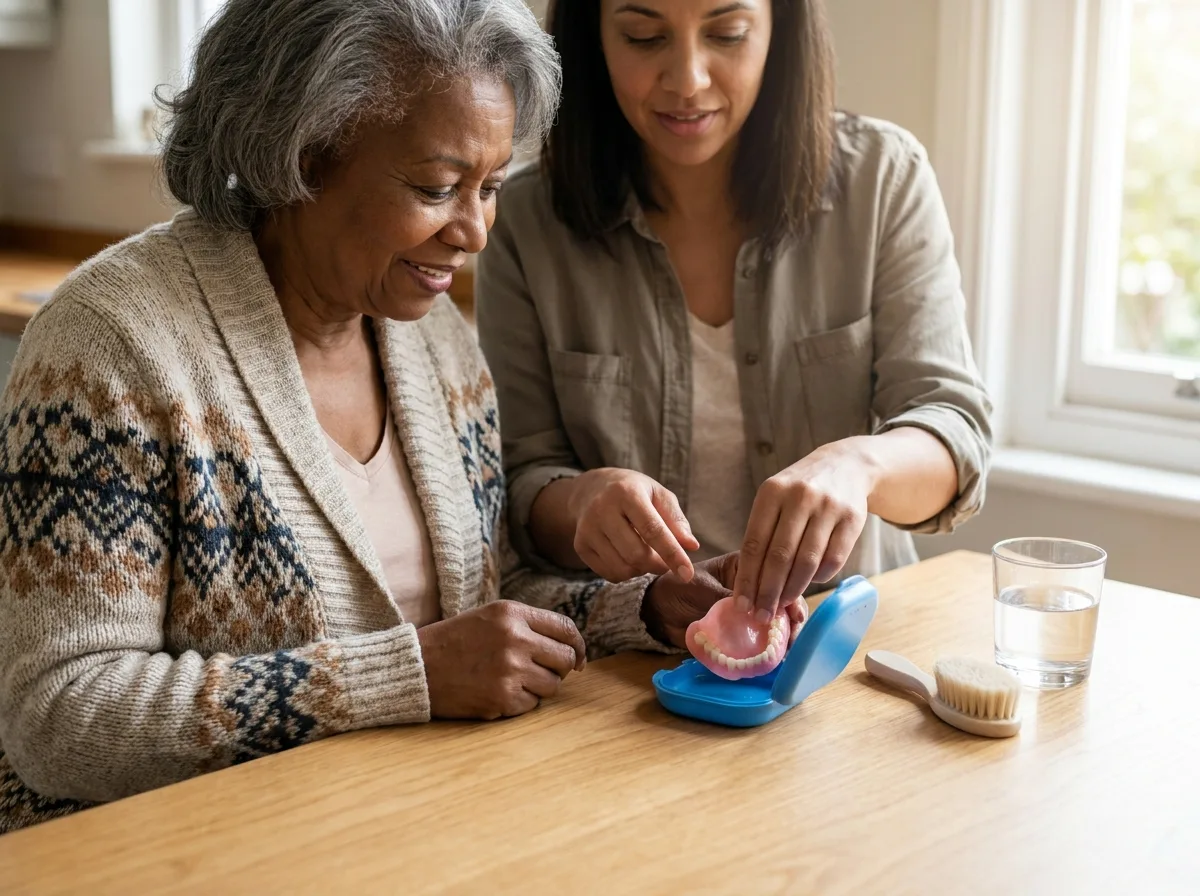
If you are coordinating care for a parent or partner, the timeline has an extra layer: transportation, energy levels, medications and sometimes memory. Write the appointment sequence on a calendar where everyone can see it. Ask whether the person will need help with insertion, cleaning or storage once the denture arrives, and whether reminders or a simple routine chart would help. People living in long-term care or retirement settings may need the care team involved so the denture is labelled, cleaned and kept safe.
If getting to a clinic is the barrier, ask about visits where the person lives. The clinic describes mobile denture services for homes, long-term care facilities, hospitals and retirement residences, and its pages describe the building as accessible for people who use wheelchairs. Availability and the steps that can be done off-site depend on the case, so call and ask before assuming.
After You Get Your Dentures: The First Weeks
The timeline does not end when you walk out with a new set. The first weeks are the adaptation phase, and they are part of the process.
Normal Adjustment Versus a Problem
The Canadian Dental Association says complete dentures can cause soreness at first and take some time to get used to. Expect extra saliva, a sense of fullness, some changes in speech and a learning curve with eating. Those usually ease with practice and small adjustments.
| What You Notice | Often Part of Adjustment | Worth a Call to Your Provider |
|---|---|---|
| Soreness | Mild tenderness in the first days | A specific spot that rubs, or soreness that does not ease |
| Extra saliva | More saliva for a short time | Persistent dry mouth or a burning feeling |
| Speech changes | Slight lisp or whistle while you practise | Sounds that do not settle with time |
| Loose feeling | Slight movement early on, especially with immediate dentures | A denture that slips or clicks when you speak or eat |
| Eating difficulty | Slower chewing at first | Avoiding foods you used to enjoy for weeks |
| Gum appearance | Slight pink areas under the denture | Persistent redness, swelling or sores |
Our article on denture stomatitis explains one common cause of persistent redness under a denture, and the sleeping with dentures guide covers a habit that matters for gum health.
Why Your Fit Will Change Over Time
Gums and bone continue to change, especially in the first months after extractions. That is why immediate dentures are often followed by a reline, and why a long-wearing denture can start to feel loose years later. The Canadian Dental Association recommends regular dental visits, at least once a year, because dentures need adjusting or relining from time to time. If your set already feels loose, our guide to suction dentures may offer some ideas worth discussing with your provider.
When to Call Your Provider Before the Next Visit
Most issues can wait for a regular appointment, but some should not. Contact your denturist or dentist promptly if you notice any of the following, and seek urgent or emergency care if you have severe swelling, fever with facial swelling, uncontrolled bleeding, trouble swallowing or trouble breathing.
- A sore that is not improving or keeps coming back
- A denture that cracks, breaks or feels suddenly different
- Swelling, pus or a bad taste that does not go away
- Pain that gets worse instead of better
- Difficulty eating or speaking that is not easing
The clinic has an emergency dentist page that describes its urgent care service. This article cannot tell you what is causing a symptom, so use these signs as a prompt to get assessed.
Cost, Coverage and Timing
Money and time are tied together more than people expect. If a benefit plan has to review or approve a treatment, or if you are paying in stages, that can shape when work begins. Prices vary by clinic, denture type and the complexity of your case, so a fixed figure would not be reliable. Ask for a written estimate and ask how payment and any approvals fit into the schedule.
The Canadian Dental Care Plan lists the services it covers on the Canada.ca coverage page, and eligibility depends on your own situation. Our article on whether the Canadian Dental Care Plan covers dentures goes into the details, and our breakdown of what a denture costs in Toronto explains what drives the numbers. The clinic’s low income dental care page describes what it offers to some patients, so ask whether it applies to you.
Questions to Ask at Your Assessment
A short list on your phone can make the first visit more useful. These questions help you understand the whole plan, not just the denture.
| Topic | Questions Worth Asking |
|---|---|
| Sequence | Which visits should I expect, and roughly how far apart? |
| Extractions | Do any teeth need to come out, and who will remove them? |
| Healing | How long should I wait before impressions, and how will you decide? |
| Temporary options | Is an immediate denture or a temporary partial a good fit for me? |
| Lab work | What happens in the lab, and how long does it usually take for my type of case? |
| Adjustments | How many follow-up visits are normal, and are they included? |
| Cost and coverage | What is the total estimate, and can you check my benefits? |
| Long-term care | When will I likely need a reline, and what will that involve? |
| Access | Can any part of this happen at home or in a care setting? |
Booking an Assessment in North York
The most useful next step is a conversation about your mouth, your goals and your calendar. Osmin Dental Clinic & Denture Laboratory is in North York near Bathurst Street and Sheppard Avenue and serves patients across Toronto. You can learn more on the about us page and the denture care page, then reach the team through the contact page or by calling 647-294-3310. If you also want to understand the roles of a denturist and a dentist, our guide on denturist vs. dentist can help you decide who to see first. You can confirm a denturist’s registration on the public register of the College of Denturists of Ontario.
The assessment is a conversation and an exam. It gives you a plan and a timeline you can plan around, and it does not commit you to anything.
Frequently Asked Questions
How long does it take to get dentures?
Usually several weeks across several appointments once your gums are healed, and longer if teeth have to be removed and healed first. Immediate dentures shorten the time without teeth, and implant-supported dentures take longer. Your provider can give you a schedule for your own case.
How long do you have to wait for dentures after teeth are pulled?
It depends on the type. Conventional dentures are made after healing, which can take weeks to months, while immediate dentures are placed on extraction day. Your dentist and denturist will decide the timing based on how your gums are healing.
Can you get dentures the same day teeth are removed?
Yes, with immediate dentures, which are made before the extractions and placed right after. They usually need more adjustments and a reline or replacement later as gums change. Ask whether they suit your situation.
How many appointments does it take to get dentures?
Usually a series of visits that includes an assessment, impressions, a bite record, a wax try-in, delivery and a follow-up. Some steps can combine, and extra visits may be added if adjustments are needed. Ask your provider for the exact sequence.
How long does a lab take to make dentures?
It varies with the design, the workload and how the clinic works. Published ranges differ, so there is no single reliable number. A clinic with its own lab can usually tell you what to expect for your case.
Do you get temporary teeth while waiting for dentures?
Sometimes. Options include an immediate denture or a temporary partial such as a flipper. Others choose to wait without teeth during healing. The right choice depends on your mouth, your plans and your comfort.
What disqualifies you from getting dentures?
There is no simple list, and the question is better answered at an exam. Gum disease, certain health conditions or the state of the remaining teeth can change the plan or the timing. A provider can explain what, if anything, needs attention first.
How long does it take to get used to new dentures?
Most people notice changes in the first days and weeks, and comfort tends to improve with practice and follow-up adjustments. The Canadian Dental Association notes that dentures can cause soreness at first. Contact your provider if soreness persists.
Why does it take so long to make dentures?
A denture is custom made in stages, and each stage has to be checked before the next. Healing, impressions, a bite record, a try-in and lab work all take time, and the steps rarely happen on consecutive days. Rushing can compromise fit.
How long do dentures take to settle?
Gums keep changing for a while, especially after extractions, so fit can shift over the first weeks and months. Follow-up adjustments are normal. Immediate dentures usually need more of them, and a reline may follow as the gums reshape.
Will I be without teeth while I wait for dentures?
Not necessarily. An immediate denture, or a temporary partial for a few missing teeth, can fill the gap. Some people choose to wait without teeth until healing is complete. Talk through the trade-offs with your provider.
Do immediate dentures look fake?
They are custom made, and the look depends on the teeth chosen and the fit. Because they are made before the extractions, they may need refinement as swelling goes down and the gums settle. Ask to preview shade and shape before the final version.
How long does it take to get partial dentures?
The sequence is similar to complete dentures, with extra attention to how the denture attaches to natural teeth. If any teeth must be removed first, healing adds to the timeline. Your provider can estimate it after an exam.
How long does it take to get implant-supported dentures?
Longer than conventional dentures, because implants need time to integrate with the bone before a final denture is attached. The exact timing is set by the clinician placing the implants and depends on your healing and the plan.
Can I speed up the denture process?
You cannot hurry healing, but you can book visits close together, give feedback early, and follow aftercare. Ask about immediate dentures or digital workflows if they suit your case. Avoid anything that skips steps just to save time.
Can a denture be made faster by skipping the try-in?
It is not a good idea. The wax try-in is the chance to check the bite, the look and your speech before the denture is finished. Skipping it can mean more adjustments later or a denture that does not feel right.
Can a denturist make my dentures if I need extractions?
A denturist makes and fits dentures, and extractions are performed by a dentist, so the two professionals coordinate the plan. Ask the clinic who will handle each part and how the visits will be arranged.
Can I get dentures at home if I cannot travel to a clinic?
Some providers offer house calls. The clinic describes mobile denture services for homes, long-term care facilities, hospitals and retirement residences. Which steps can be done off-site depends on the case, so call and ask.
Does the Canadian Dental Care Plan cover dentures, and could it affect timing?
Coverage and eligibility depend on your situation and the service. Ask the clinic whether any approval or paperwork is needed before treatment, since that can influence when work begins. The Canada.ca coverage page lists the services the plan includes.
Leave a Reply
You must be logged in to post a comment.