
Flipper Tooth: What It Is, How Long It Lasts, and Whether It Is Right for You
You have lost a tooth, maybe on the day of an extraction, maybe after an accident, and your dental team has mentioned a “flipper.” It sounds like a gadget, and the first questions are usually practical ones. Will it show? Can I eat with it? Is it supposed to last, or is it just to get me through?
A flipper tooth is a lightweight removable partial denture, usually made of acrylic, that fills a gap while you wait for something more permanent or while your gums heal. It is common, relatively simple, and often misunderstood. This guide explains what a flipper is, how it stays in, what daily life with one is like, where it falls short, and how it compares with a standard partial denture, a bridge and an implant. It also covers who makes these appliances in Ontario and what to ask before you decide.
General information like this cannot replace an exam. Whether a flipper suits you depends on your remaining teeth, gums, bite, health history and goals, so use this as preparation for a conversation with the denturist or dentist who will assess your mouth.
What Is a Flipper Tooth?
A flipper tooth is a temporary removable partial denture that replaces one or more missing teeth. It has a pink acrylic base that rests on the gum, with a prosthetic tooth attached, and it is taken out for cleaning. Flippers are typically worn short term, such as while gums heal after an extraction or while an implant or bridge is planned.
A flipper is one of several kinds of removable appliance, and our overview of removable dentures shows where it sits alongside cast frame partials, flexible partials and complete dentures.
The name comes from the way people can flip the appliance in and out of the mouth. You will also hear it called an interim partial denture, a temporary partial, a transitional denture, a dental flipper, or simply a “one tooth flipper” when it replaces a single tooth. These all describe the same basic idea: a custom-made, removable placeholder. If you want the background on partial dentures in general, our overview of the difference between a complete and a partial denture is a good companion read.
The Parts of a Flipper
Most flippers are made of three things. The base is gum-coloured acrylic shaped to the contours of your gum and, for upper flippers, often part of the palate. The replacement tooth or teeth are acrylic or resin and are chosen for shape and shade. Some designs add thin wire clasps that hook around neighbouring teeth, while others rely on the fit of the acrylic alone.
Because the appliance is made on a model of your mouth, the fit comes from careful impressions and a bite record, not from a stock size. Our partial dentures page describes how the clinic designs and fits removable partials, and the same principles apply to the temporary kind.
Is a Flipper the Same as a Partial Denture?
A flipper is a type of partial denture, but not every partial denture is a flipper. The word usually points to the lightest, simplest, most temporary version. A longer-term partial denture is generally built with more durable materials or a reinforcing frame, a more refined clasp design and a plan for years of wear. We compare the two in detail further down.
How a Flipper Tooth Stays in Place
Retention is the part people worry about most, and it is where flippers vary the most. There is no single method. How well a flipper holds depends on the design, the teeth beside the gap and the shape of the gums.
Wire Clasps and Tooth Contact
Some flippers use small wire clasps that gently grip neighbouring teeth. Others tuck snugly against the sides of nearby teeth so the acrylic itself provides a little friction. Clasps can improve grip but can also show when you smile, which matters for a front tooth. A denturist or dentist can explain which style suits the position of your gap.
Gum and Palate Coverage
An upper flipper often has a thin acrylic plate that covers part of the roof of the mouth. Lower flippers usually sit on a smaller area, since the tongue and floor of the mouth have less room. Suction and the closeness of the acrylic to the tissue add to the hold. Extra coverage can feel bulky at first, but it also spreads biting pressure over more tissue.
Why a Flipper Can Feel Looser Than You Expect
A flipper rests mostly on soft tissue rather than being anchored to anything. After a recent extraction the gums and bone are still reshaping, so the fit can change in a matter of weeks. That is normal and is one reason flippers need follow-up visits. If yours loosens, it is a reason to call and have it checked, not to reach for improvised fixes. Our guide to what denture adhesive can and cannot fix explains why adhesive is not always the answer.
When a Flipper Tooth Is Used
Flippers earn their place in a handful of everyday situations. In each one the common thread is a gap that needs covering for a limited time, or a decision that has not been made yet.
| Situation | Why a Flipper Might Be Considered | Question to Ask |
|---|---|---|
| After an extraction | Covers the gap while the socket and gum heal, which can take weeks to months | Can it be placed the same day, and when will it need adjusting? |
| Waiting for a dental implant | Fills the space while the site heals before or after implant placement | Will it press on the implant site, and who checks the fit? |
| Planning a bridge | Holds the space while a fixed bridge is designed and made | How long will I realistically need it? |
| A missing front tooth | Restores the look of a smile quickly | Will the clasps show, and what are the alternatives? |
| Budget or timing constraints | A simpler appliance can be a stepping stone while you plan treatment | What will a longer-term option involve, and what happens if I wait? |
| Health or schedule reasons for postponing surgery | Gives you a removable option while you decide | Which of my conditions affect the timing? |
After a Tooth Extraction
This is the classic use. When a tooth comes out, the gum and bone begin remodelling right away. A flipper can hide the gap and protect the area while that happens. It is closely related to an immediate denture, which is placed on the day teeth are removed. If you are curious about how those work for larger numbers of teeth, we explain the process in immediate dentures in Toronto, and the clinic describes the service on its immediate dentures page.
Recovery after an extraction has its own rules, and a flipper does not change them. Your dentist will explain how to protect the socket, and our articles on how long extraction sites take to heal and tips for faster recovery after an extraction cover the general picture. Whether to wear a flipper in the first days, and for how many hours, is something to ask the provider who placed it.
While You Wait for an Implant or Bridge
Implants need time to integrate with the jawbone, a process explained in our piece on osseointegration of dental implants. Bridges take planning and laboratory time. A flipper can cover the gap in the meantime. The details matter, though, because the appliance may need to be modified or left out around a surgical site. That decision belongs to the clinician placing the implant.
As a Short-Term Cosmetic Fix
Some people use a flipper for a wedding, a new job or a few months of everyday confidence. It can do that well. It is worth being honest with yourself about the timeline, because a temporary piece that stays in service for years is the situation that causes most of the trouble described below.
For a wider look at longer-term designs, see our guide to partial dentures.
Flipper vs Partial Denture vs Bridge vs Implant
Choosing between replacement options is easier when you see them side by side. The table is general and not a recommendation, because your own teeth, gums and goals decide what is appropriate.
| Option | Removable? | Typical Role | Main Strengths | Main Limits |
|---|---|---|---|---|
| Flipper (interim partial) | Yes | Short-term placeholder | Simpler design, no tooth reshaping, quick way to cover a gap | Less stable, can break, not designed for years of use |
| Standard removable partial denture | Yes | Medium to long-term replacement | Built for ongoing wear, can replace several teeth, no surgery | Still removable, needs regular care and periodic reline |
| Flexible partial denture | Yes | Metal-free removable option | Thin, light and often less visible clasps | Harder to adjust or reline; suitability varies |
| Fixed dental bridge | No | Long-term replacement | Feels like natural teeth, does not come out | Usually involves preparing neighbouring teeth |
| Dental implant | No | Long-term replacement | Stands alone, does not rely on neighbouring teeth | Requires surgery, healing time and enough bone |
For a deeper look at the longer-term choices, see our articles on partial denture costs in Toronto, who is a good candidate for flexible dentures, implant-supported dentures versus bridges and dental implants versus dentures. Clinic pages on dental bridges and dental implants describe those services directly.
Why Neighbouring Teeth Matter
When a tooth is missing, the teeth beside it can drift or tilt into the space, and the tooth above or below can slowly move toward the gap. A well-fitting flipper can act as a spacer that discourages some of that movement while you decide on a lasting option. It is not a guarantee, and it does not stop bone changes in the gap, so it is a stop-gap rather than a cure.
How a Flipper Tooth Is Made
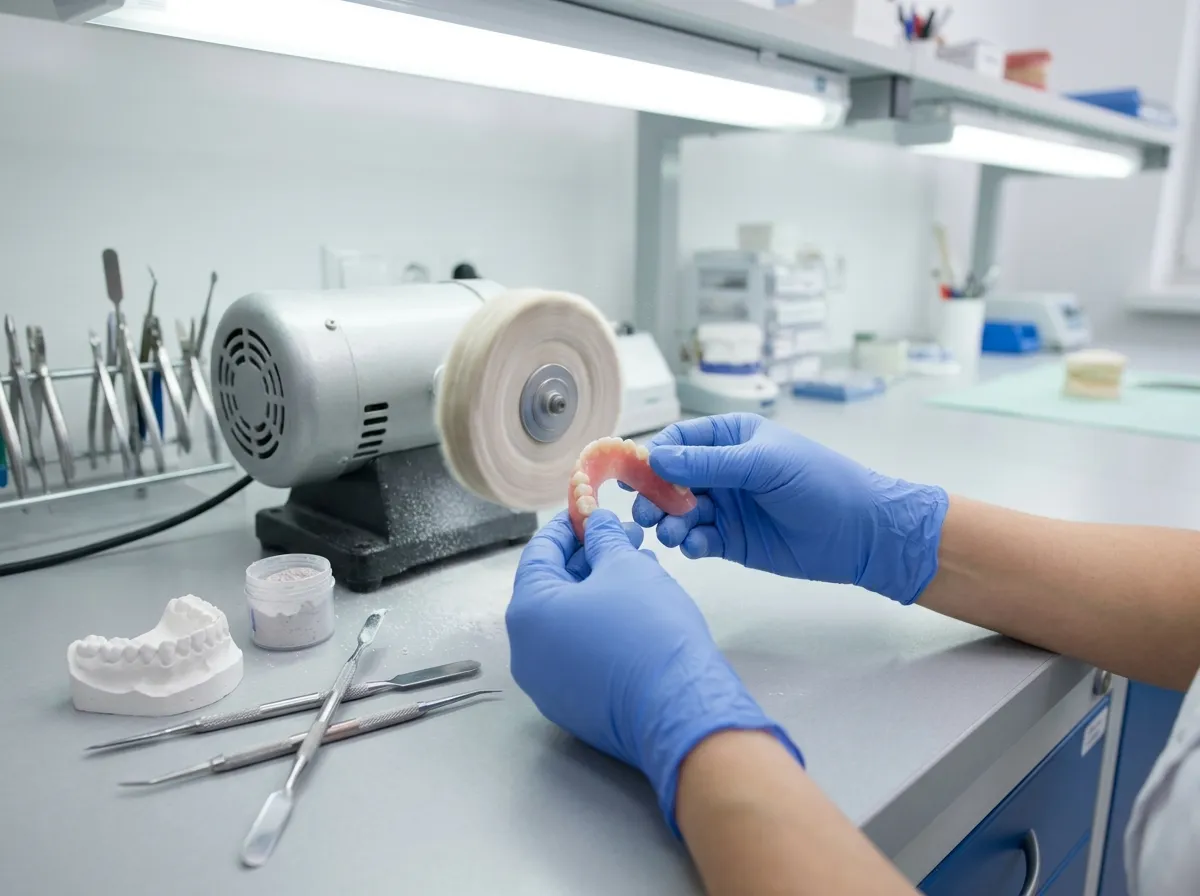
The steps are straightforward, which is why flippers are often simpler than other prosthetics. The provider examines the mouth, takes impressions of the teeth and gums, records how your teeth meet, and chooses a tooth shade and shape. The laboratory makes the appliance on a model, and the first fitting checks comfort, bite and appearance. Small adjustments follow.
Clinics with their own laboratory can sometimes shorten the back-and-forth between fitting and adjustment, and the Osmin clinic operates an on-site denture laboratory. Timelines still depend on your mouth, the design and the clinic’s schedule, so ask for the specific timing in your case instead of relying on a general promise.
How Long Does a Flipper Tooth Last, and Can It Be Permanent?
A flipper tooth is designed as a short-term appliance. How long it stays serviceable depends on the materials, how you wear and clean it, and how much your gums and bone change under it. It is not designed to be a permanent solution, and your provider can tell you when yours should be reviewed, relined or replaced.
You will see online claims that a flipper lasts a specific number of months. Those figures vary from source to source and cannot account for your own mouth, so we have not repeated one here. A better yardstick is behaviour. A flipper is due for a check when it cracks, loosens, rubs, starts to smell despite cleaning, or when the gum under it looks red or puffy.
Why Flippers Wear Out Faster
Acrylic is light and easy to adjust, but thin acrylic can crack when you bite on hard food or drop the appliance. Clasps can bend. Teeth can chip. Stains and scratches collect plaque over time. Most importantly, the tissue under the base keeps reshaping, so a flipper that fit well in week one can feel different by week eight. That mismatch is why denture relines and adjustments exist, and the same logic applies to partial appliances. Our general guide to how long dentures last explains the wear pattern for longer-term dentures.
Can a Flipper Be Used Long Term?
Sometimes people keep one for a long time because other options are not possible, not wanted or not affordable right now. That is a legitimate choice, and it should be a conscious one made with your provider. A longer-term plan usually includes regular reviews, attention to the gums, and a conversation about moving to a sturdier design. If you are weighing alternatives that avoid implants, our article on fixing missing teeth without implants lays out the main routes.
Living With a Flipper: Eating, Speaking and Sleeping
The first days are mostly about getting used to a new object in your mouth. Most of the common worries, such as speech and eating, settle with practice, and your provider can refine the fit when something rubs.
Can You Eat With a Flipper Tooth?
Yes, most people can eat with a flipper, but chewing is usually less efficient than with natural teeth or a fixed replacement. Starting with soft foods, cutting food into smaller pieces and chewing on both sides tends to help, and hard or sticky foods are best avoided unless your provider says otherwise.
Think of a flipper as a placeholder that helps with appearance and some chewing, not as equipment for biting into a crusty loaf or a whole apple. Sticky candy and chewing gum can pull a clasp loose or lift the base. Our guides to eating with dentures and foods to avoid with dentures apply to flippers too.
Will It Change How You Speak?
It can, briefly. Front teeth and palate coverage affect where the tongue touches, so s and t sounds can feel odd for a few days. Reading aloud and repeating tricky words usually helps. If a lisp or whistle lasts beyond the adjustment period, the shape of the appliance can often be modified. Our article on adjusting to new dentures describes what the adaptation phase tends to look like, and much of it carries over.
Can You Sleep With a Flipper In?
For most removable partials, including flippers, the usual advice is to take them out at night so the gums can rest and saliva can clean the mouth. The exception is when your provider tells you to keep one in for an initial period, for example right after an extraction.
Sleeping in a removable appliance can irritate gum tissue, encourage plaque on the acrylic and the teeth it touches, and raise the risk of yeast overgrowth. A small flipper can also shift during sleep. We go through the reasoning in should you sleep with dentures in, and the same principles apply here. The Ontario Dental Association’s denture care guidance is a good outside reference for daily care habits.
Does It Feel Uncomfortable?
Some pressure and a sense of bulk are common at first. Sharp pain, a persistent sore spot or a spot that bleeds is not something to push through. A small adjustment by the person who made the appliance usually fixes it, and it is quicker than waiting for the tissue to toughen up, which it will not do properly if the pressure point is real.
Cleaning and Caring for a Flipper Tooth
A flipper is a plaque trap if it is neglected. The acrylic is slightly porous, the base sits against the gum, and clasps touch natural teeth. Good care is mostly about gentleness and routine.
| Habit | How Often | Why It Helps |
|---|---|---|
| Rinse after eating | After meals when possible | Removes food debris before it dries onto the acrylic |
| Brush with a soft brush and mild soap or a denture cleanser | At least once a day | Removes plaque without scratching; regular toothpaste can be abrasive |
| Brush your natural teeth and gums as usual | Twice a day | Clasped teeth are more exposed to plaque, so they need extra attention |
| Take it out at night | Nightly, unless told otherwise | Lets the gum tissue rest and saliva clean the area |
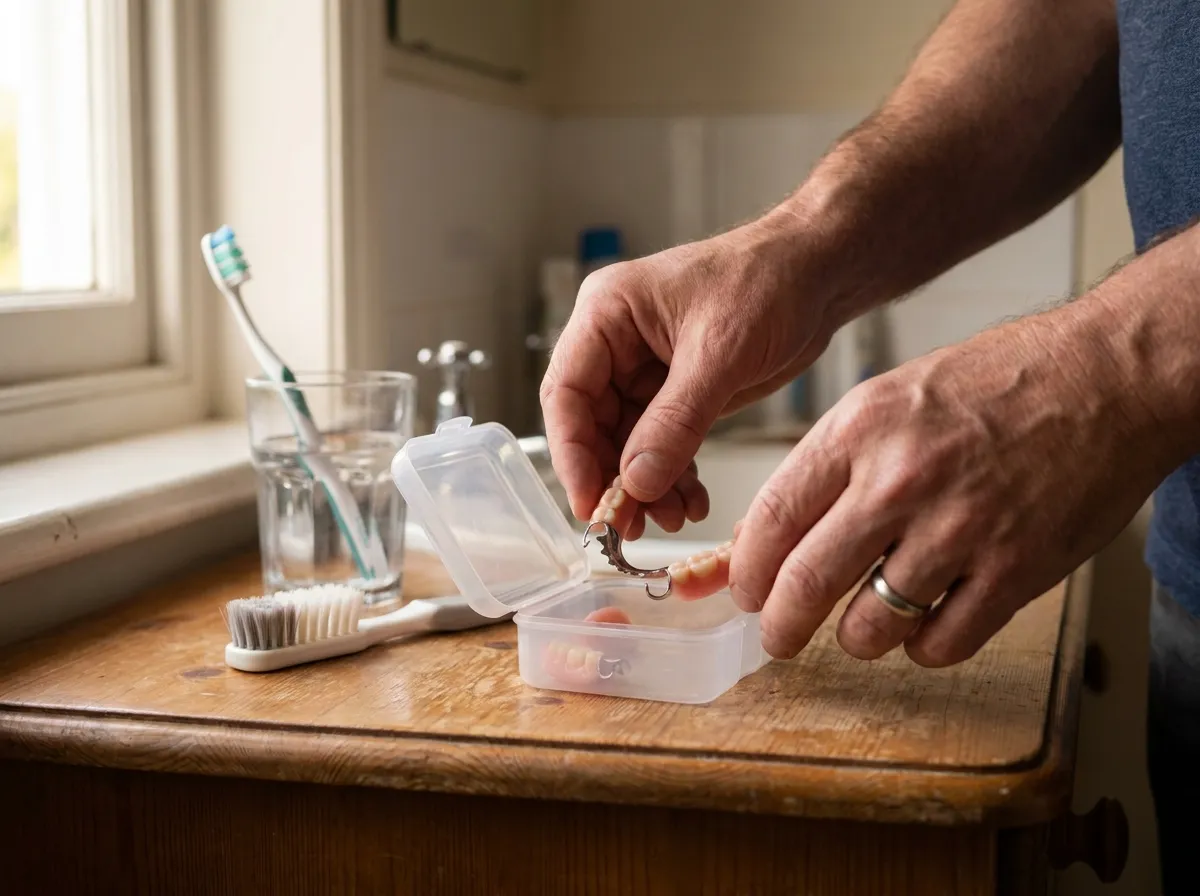
| Store it safely | Whenever it is out | A rigid case prevents breaks; ask whether to store it wet or dry |
| Handle it over a soft surface | Every time | A dropped acrylic appliance over a hard sink can crack |
| Avoid hot water and harsh chemicals | Always | Heat can warp acrylic, and bleach-type products can damage the surface |
| Keep review appointments | As your provider advises | Fit changes can be caught before they cause sores |
For the longer routine, our guides on how to clean dentures and denture care at the clinic go through products and technique. The cleaning rules for a flipper are the same as for any acrylic removable appliance, with extra care because it is thin.
Caring for the Teeth and Gums Around the Gap
Do not forget the mouth itself. The gum under a flipper needs a break, a gentle brush and a regular look for redness. If the gum looks swollen or you notice a bad taste, review our guide to denture stomatitis, which describes how redness under a removable appliance can start and when to have it checked.
Risks and Drawbacks of a Flipper Tooth
Flippers are useful, but they come with trade-offs you should hear about up front. Most of the problems below are manageable when they are caught early.
| Concern | Why It Happens | What Usually Helps |
|---|---|---|
| Breakage or cracks | Thin acrylic and clasps flex under biting force or when dropped | Soft diet at first, careful handling, a prompt repair visit |
| Loose fit | Gums and bone reshape, especially after a recent extraction | Adjustment or reline by the provider |
| Sore spots | A pressure point where the acrylic or a clasp rubs | Take it out and book an adjustment rather than waiting |
| Plaque, decay or gum irritation | The base and clasps hold plaque against teeth and gums | Daily cleaning, nightly removal, regular check-ups |
| Yeast overgrowth under the base | Continuous wear and poor cleaning create a warm, moist environment | Hygiene, overnight rest and assessment if redness persists |
| Staining | Acrylic absorbs pigments from coffee, tea, wine and some foods | Rinse after drinks and clean daily |
| Altered speech or gagging | Palate coverage changes how the tongue and soft palate move | Time to adapt, then ask for modifications |
| Material sensitivity | Rare reactions to acrylic or metal in clasps | Tell your provider about known allergies before fabrication |
| Staying in use too long | A temporary appliance becomes the default plan | Agree a review date and a long-term plan up front |
Clasps and the Teeth They Touch
Clasps rest against natural teeth, and any removable appliance that touches teeth can make them harder to keep clean. Extra plaque near a clasp can lead to decay or gum inflammation if it is ignored. Brushing carefully around those teeth and keeping up professional cleaning appointments protects them. Our overview of professional teeth cleaning describes that service at the clinic.
Repairs and Relines
If a flipper cracks or a tooth comes off, do not glue it at home. Household adhesives can be unsafe to put in the mouth and can make a professional repair harder. Bring the pieces to the provider who made it. Our guide to dealing with a broken denture covers what to do in the meantime, and the clinic page on denture adjustment and reline describes how repairs are handled. Whether a reline makes sense for a thin temporary appliance, or whether a replacement is the better use of money, is a judgment call for your provider.
Who Makes a Flipper Tooth in Ontario: Denturist or Dentist?
Both can be involved, and the answer depends on what else you need done. In Ontario, denturists are regulated health professionals who assess, design and fit removable dentures, including partial dentures, and the College of Denturists of Ontario is the regulator that sets standards for them. Dentists provide the wider range of dental procedures, such as extractions, fillings, implant surgery and fixed bridge work, and some also make removable appliances.
A practical way to think about it is by task. If the plan is a removable flipper for a gap that already exists, a denturist is a natural fit. If the tooth still has to be removed, or you want an implant or a bridge, a dentist will be involved for those steps. Our article on denturist versus dentist explains how the two roles fit together, and the clinic page on tooth extraction describes that service. If you are unsure who handles which part of your plan, it is reasonable to ask before you book.
The Osmin clinic also provides mobile denture services for people who cannot easily travel, including house calls, long-term care homes, hospitals and retirement residences. Ask whether your situation fits the services offered, since not every procedure suits every setting.
Online Kits and Mail-Order Flippers
Searching for a flipper tooth often brings up kits and mail-order partials sold by online shops. They are marketed on price and convenience, and the appeal is easy to understand. There are good reasons to be cautious. Some kits ask you to take your own impressions or use a heated material to shape something in your mouth, which can go wrong in ways that are not obvious to a layperson. A poorly fitting appliance can irritate tissue, trap plaque or press on a healing site.
A proper assessment also checks the things a website cannot, such as the health of the neighbouring teeth, signs of gum disease, how your teeth meet, and whether an extraction site is still healing. If you have already bought something or are tempted to, a quick visit to a denturist or dentist is a sensible step before you wear it regularly. No blog post can tell you whether a specific product is safe for you.
Cost and Coverage: What Affects the Price of a Flipper?
Prices for flippers vary between clinics, and they change over time, so we do not quote a figure here. Other sites that list numbers are usually generalizing from other regions or older data. For a real estimate, ask the clinic directly, because the actual cost depends on factors that only an exam can reveal. Our comparison of partial flexible denture costs gives context for how denture pricing is usually structured.
| Cost Factor | Why It Changes the Price |
|---|---|
| Number of teeth replaced | More teeth mean more materials and laboratory time |
| Design and clasps | Clasped, palate-free or reinforced designs differ in work involved |
| Whether an extraction is needed first | The extraction is a separate procedure with its own fee |
| Adjustments and follow-up visits | Some are included, some are billed, so ask which |
| Repairs and relines later | A temporary appliance may need more of these than a long-term one |
| The long-term plan | A flipper adds to the total if it is followed by an implant or bridge |
Does the Canadian Dental Care Plan Cover Flippers?
It depends on your eligibility and the specific service. The federal Canadian Dental Care Plan coverage page lists removable prosthodontic services, and at the time we checked it mentioned partial dentures as requiring preauthorization. It does not say how an interim or temporary partial is treated, so ask the clinic to confirm what applies to you before treatment. Our guides on CDCP and dentures and CDCP coverage for implants, crowns and root canals explain how the program is structured, and the clinic’s own pages note that it accepts CDCP. Coverage rules change, so always confirm with the clinic and the plan.
Questions to Ask at Your Assessment
A short list on your phone can make the visit more useful. These questions help you understand the plan, not just the appliance.
| Topic | Questions Worth Asking |
|---|---|
| Suitability | Is a flipper appropriate for my gap, bite and gum health, or is another design better? |
| Timeline | How long should I expect to wear it, and when will it be reviewed? |
| Long-term plan | What is the next step after the flipper, such as an implant, bridge or standard partial? |
| Wearing instructions | When should I wear it, and when should it be out, especially in the first days? |
| Follow-up | How many adjustment visits are likely, and are they included? |
| Care | Which cleaner is safe for this material, and should it be stored wet or dry? |
| Cost and coverage | What will it cost in total, and can you check CDCP or my other benefits? |
| Risks | What problems should I watch for, and what should I do if it breaks? |
| Access | Can I be seen at home or in a care setting if getting to the clinic is hard? |
For Caregivers and Family Members
If you are helping someone with a flipper, the details are simple but they matter. Make sure the appliance comes out at night, is cleaned gently, and goes into a labelled case. Watch for new redness, a bad smell, reduced eating or a person who stops wearing it because it hurts. People with memory or mobility challenges may need help with insertion and cleaning, and a provider who offers visits at home or in a care setting can be a practical option. The mobile denture services page explains what the clinic offers there.
When to See Someone About Your Flipper
Most flipper issues are routine and can wait for a regular appointment. Book a visit if you notice a loose or cracked appliance, a rubbing spot, persistent redness, a bad taste, difficulty eating, or a gap that has begun to change shape. Early adjustment is usually simpler than repairing a problem that has had weeks to develop.
Some symptoms are not routine. Seek urgent care for rapidly spreading facial swelling, swelling with fever, uncontrolled bleeding, a hard knock to the mouth, or any trouble breathing or swallowing. If you are not sure whether something is an emergency, our guide to understanding dental emergencies can help you think it through, and the clinic’s emergency dentist page lists urgent care options. This article cannot diagnose a problem, so if something worries you, get it looked at.
Booking an Assessment in North York
If you are replacing a missing tooth, a short conversation with a denturist or dentist can clarify whether a flipper, a standard partial, a bridge or an implant fits your situation and timeline. Bring a list of your medications and health conditions, any earlier dental records, and the questions above. The clinic’s partial dentures page mentions a no obligation initial consultation, so ask about it when you call. You can reach the team through the contact page or by calling 647-294-3310. An assessment is a conversation and an exam, and it does not commit you to any particular treatment.
Frequently Asked Questions
What is a flipper tooth?
A flipper tooth is a temporary removable partial denture, usually made of acrylic, that replaces one or more missing teeth. It rests on the gum, sometimes with small clasps, and is taken out for cleaning. It is typically worn short term while gums heal or while a longer-term option is planned.
Is a flipper tooth a good idea?
It can be a sensible stopgap when you need to cover a gap while you heal or plan treatment. It is less suited to long-term use because it is lighter and less stable than other options. Whether it is a good idea for you depends on your mouth and goals.
How long does a flipper tooth last?
It is designed for short-term use, and the time it stays serviceable varies with materials, care and how your gums change. Cracks, looseness, rubbing or persistent redness are signs it needs attention. Ask your provider for a review date instead of relying on a general number.
Can you eat with a flipper tooth?
Yes, for most people, though chewing is less efficient than with natural teeth. Soft foods, smaller bites and chewing on both sides help. Hard, sticky or chewy foods can loosen or damage the appliance, so avoid them unless your provider says otherwise.
Can you sleep with a flipper tooth in?
Usually no. Removing it at night lets your gums rest and your saliva clean the mouth, and it lowers the chance of irritation and yeast overgrowth. If you have just had an extraction, your provider may ask you to keep it in for an initial period, so follow those instructions.
Can you wear a flipper all day?
Many people wear one during waking hours and take it out at night. How many hours you should wear it, especially in the first days after an extraction, depends on your situation. Ask the provider who made it for specific wearing instructions.
Do flipper teeth fall out easily?
They can feel loose, because many rest mostly on soft tissue and have limited clasps. A recent extraction can make this more noticeable as the gums reshape. A loose flipper is worth having adjusted or relined, and it should not be held in with improvised fixes.
What holds a flipper tooth in place?
Fit against the gum and teeth, some suction, and in many designs thin wire clasps around neighbouring teeth. Some rely on acrylic that tucks closely against the teeth beside the gap. The design is chosen to suit the position of the gap and the condition of the teeth.
How much does a flipper tooth cost in Canada?
Prices differ between clinics and change over time, so a fixed figure would be misleading. The number of teeth, the design, any extraction and follow-up visits all matter. Ask the clinic for a written estimate, and ask whether the Canadian Dental Care Plan or other benefits apply.
Is a flipper cheaper than a partial denture or a bridge?
It is often a simpler appliance, so it can cost less up front, but a temporary piece may need repairs and will not remove the cost of a longer-term option later. Compare the total plan, not just the first invoice. Your provider can help you map it out.
Can a flipper tooth be permanent?
It is not designed to be. Some people use one for a long time by choice or necessity, but that works best with regular reviews and a plan for a sturdier design. If a flipper has become your long-term solution, ask about a standard partial denture.
What is the alternative to a dental flipper?
Alternatives include a standard removable partial denture, a flexible partial, a fixed bridge and a dental implant. Each has different strengths, limits and costs. Which one is appropriate depends on your remaining teeth, gums, bone and goals, so it needs an exam.
What is the difference between a flipper and a partial denture?
A flipper is a kind of partial denture, usually the lightest and most temporary kind. A standard partial denture is built for longer wear, often with sturdier materials or a metal frame and a more refined fit. Your provider can explain which type suits your plan.
Will a flipper change my speech?
It can for a few days, especially s and t sounds, since the appliance changes where the tongue touches. Reading aloud helps most people adapt. If the change lasts, the shape can often be adjusted, so mention it at your follow-up.
How do I clean a flipper tooth?
Rinse after meals, brush it gently with a soft brush and mild soap or a denture cleanser, and avoid abrasive toothpaste and hot water. Clean your natural teeth as usual. Store it in a case when it is out, and ask your provider whether to keep it wet or dry.
Can I make a dental flipper at home?
It is not a good idea. Home kits can fit poorly and irritate tissue, and they do not include an exam of your gums and teeth. If cost or access is the barrier, ask a denturist or dentist about options before using one.
What should I do if my flipper breaks?
Stop wearing it, keep all the pieces, and do not use household glue. Contact the provider who made it for a repair or replacement. If the break caused cuts, bleeding or swelling, seek care promptly.
Does the Canadian Dental Care Plan cover flipper teeth?
Coverage depends on your eligibility and the specific service. The program’s coverage page lists removable prosthodontic services, but it does not specifically address flippers, so the clinic needs to confirm how your plan treats one. Ask before treatment begins.
Can a flipper hold space for an implant?
It can help cover the gap and maintain appearance while an implant site heals, but design and wearing instructions have to be coordinated with the clinician placing the implant. Ask them whether and when to wear it.
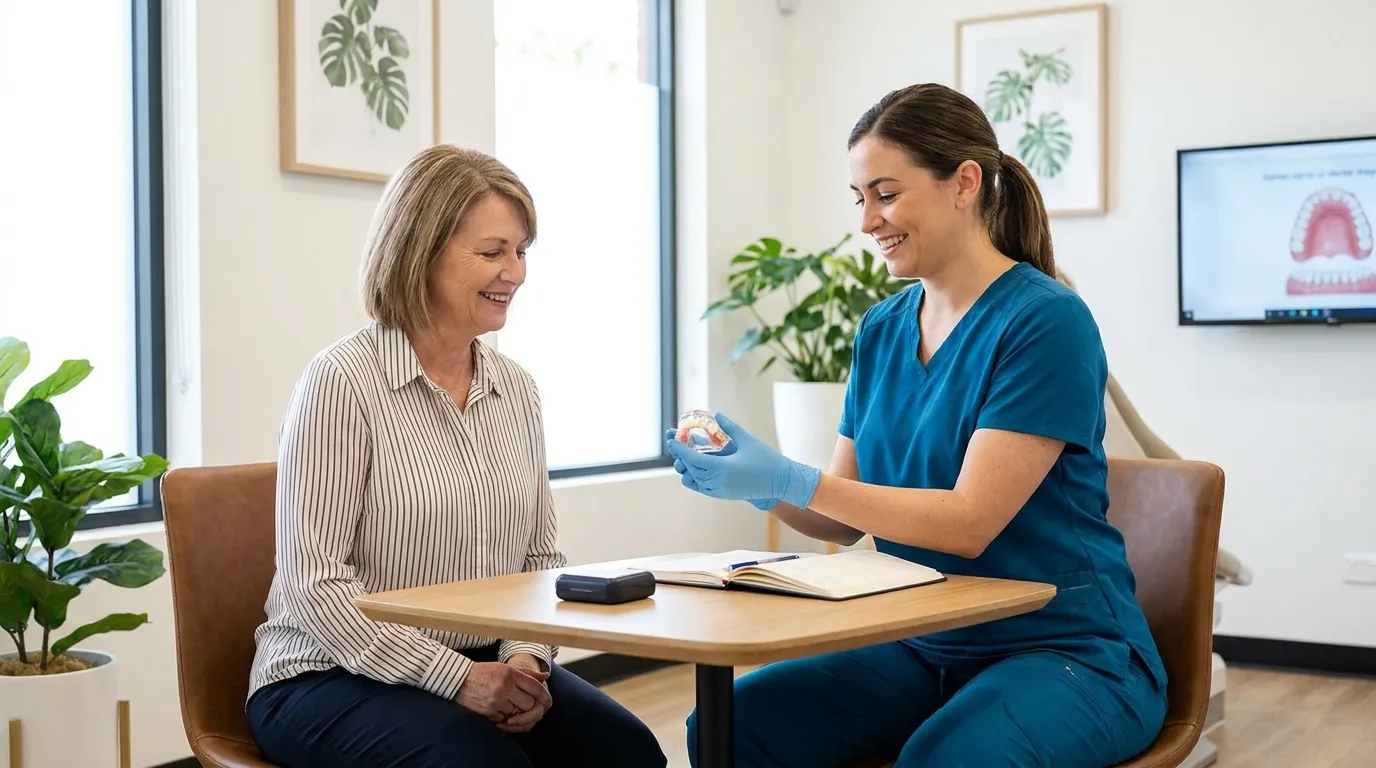
Editor’s note: This article includes three images generated for this post with Higgsfield marketing_studio_image. Hero/featured image: “flipper-tooth-denturist-consultation-partial-denture.webp” (1376x768px, WebP, ~88KB), titled “Denturist explaining a removable partial denture to an adult patient,” alt text “Denturist showing an adult patient a removable partial denture model during a consultation about replacing a missing tooth,” caption “A consultation is the place to ask whether a temporary flipper or a longer-term option suits your mouth.” Generated at 16:9 with the prompt: “Realistic dental clinic photograph: a friendly denturist in clean scrubs sitting across a small table from a smiling middle-aged adult patient in a bright, modern consultation room, gently holding a small acrylic partial denture model with one replacement tooth and explaining how it fits, notebook and case on the table. Warm natural window light, tasteful clinical decor, no visible logos or text, no procedure being performed, respectful and calm mood, anatomically accurate hands, high detail, professional photography style.” Placement: featured image only, not duplicated inline.
Inline image 1: “denture-lab-polishing-acrylic-partial-denture.webp” (1200x896px, WebP, ~45KB), titled “Technician polishing an acrylic partial denture at a laboratory bench,” alt text “Laboratory technician polishing a small acrylic removable partial denture at a clean denture lab bench,” caption “A flipper is a custom acrylic appliance made on a model of your mouth, then finished and polished by hand.” Generated at 4:3 with the prompt: “Realistic photograph of a clean denture laboratory bench: a technician’s gloved hands carefully polishing a small pink acrylic removable partial denture with a single replacement tooth on a bench motor, plaster models and dental tools neatly arranged, bright even lighting, no blood, no visible text or logos, professional and hygienic atmosphere, high detail, professional photography style.” Placement: How a Flipper Tooth Is Made section.
Inline image 2: “partial-denture-case-bedtime-cleaning-routine.webp” (1200x896px, WebP, ~55KB), titled “Placing a partial denture into its case at bedtime,” alt text “Hands placing a removable partial denture into a clean case beside a glass of water and a soft brush on a bathroom counter,” caption “Cleaning a flipper gently and giving the gums a rest at night are the two habits that matter most.” Generated at 4:3 with the prompt: “Realistic photograph of adult hands placing a small removable partial denture into a clear denture case beside a glass of water and a soft denture brush on a bright bathroom counter in the evening, calm everyday oral-care routine, soft natural light, no visible text or logos, anatomically correct hands, high detail, professional photography style.” Placement: Cleaning and Caring for a Flipper Tooth section.
Suggestions for a human designer and dental reviewer: a labelled diagram of the parts of a flipper (base, tooth, clasp), a simple decision aid comparing flipper, standard partial, bridge and implant, and a printable daily care checklist would extend this piece well. AI image models are unreliable for anatomy and chart text, so these are best built by a qualified designer and reviewed clinically.
Leave a Reply
You must be logged in to post a comment.