

Removable Dentures: Types, Daily Care, and How to Know Which Is Right for You
Losing teeth changes more than your smile. It changes what you can eat, how you speak, and how comfortable you feel at a family dinner. When someone mentions removable dentures, the questions that follow are usually very practical. Will they stay in? Will people notice? How do I look after them, and how long before they feel normal?
Removable dentures are false teeth set in a gum-coloured base that you can take out and put back in yourself. They are the most widely used way to replace missing teeth, and they come in several forms, from a single-tooth partial to a full set for the upper and lower jaw. This guide explains the types, how they stay in place, how they are made, what daily life with them looks like, when they need a reline or repair, and how they compare with fixed options like bridges and implants.
Everything here is general education. Whether removable dentures suit you depends on your remaining teeth, gums, bone, health history and goals, which only an in-person assessment can sort out. Use this page to prepare for that conversation with a denturist or dentist, and bring your own questions along.
What Are Removable Dentures?
Removable dentures are custom-made replacement teeth and gum-coloured bases that rest on your gums and, in the case of partials, clasp onto nearby natural teeth. You can take them out for cleaning and at night. They replace anything from a few missing teeth to a full arch, and they are made from impressions of your mouth.
If you are also deciding what the teeth themselves should be made of, our guide to denture teeth types and how acrylic, composite and porcelain compare explains the trade-offs in look, wear and repair.
The Canadian Dental Association describes dentures as artificial replacements for natural teeth and gums, and groups them into two main kinds, partial and complete, both custom-made from impressions of your mouth (Canadian Dental Association: Dentures). The word “removable” is what separates them from fixed options such as a dental bridge or implant-supported teeth that stay put until a professional removes them.
Why Being Removable Matters
Being able to take your teeth out is a practical advantage. You can clean every surface properly, rest your gums overnight, and bring the denture back to your provider for a reline or repair without any surgery. It is also the reason removable dentures usually cost less up front than implant-based teeth and can be started sooner after tooth loss.
The trade-off is that a removable denture sits on top of your gums instead of anchoring into bone. That affects how firmly it holds and how it feels when you chew, and it is the main reason people look at implants later. We cover that comparison further down, and our guide to dental implants vs dentures goes deeper on it.
Who Makes Removable Dentures in Ontario?
In Ontario, removable dentures can be made by a denturist or a dentist. Denturists are regulated by the College of Denturists of Ontario, and designing, fitting and adjusting removable dentures is the core of their work. Dentists cover wider ground, including extractions, implant surgery, gum treatment and prescribing medication. Many people see both at different points. Our comparison of denturist vs dentist explains who does what, so you can book the right visit first.
The Main Types of Removable Dentures
“Removable dentures” is a family of appliances, not one product. The right type depends on how many natural teeth you have left, the health of your gums and bone, and what you want the denture to do. Here is how the main types differ.
Complete (Full) Dentures
A complete denture replaces every tooth in the upper arch, the lower arch, or both. The base rests on the gums and, for the upper jaw, covers the palate. According to the CDA, complete dentures are held in place by suction, and they can feel sore at first and take some time to get used to. They come as conventional dentures, made after the gums have healed from extractions, or as immediate dentures, made in advance and placed the day the teeth come out. You can read how the clinic approaches them on our complete dentures page.
Immediate Dentures
An immediate denture is made before your teeth are removed so that you are not without teeth while you heal. The CDA notes that healing can take up to six months, and that during this time bone and gums shrink, so an immediate denture often needs to be relined for a proper fit. If extractions are on your calendar, our page on immediate dentures and the longer guide to immediate dentures in Toronto walk through what to expect.
Removable Partial Dentures
A partial denture fills gaps when you still have some natural teeth. It usually has replacement teeth on a gum-coloured base and clasps that fit onto neighbouring teeth, and you can take it out yourself for cleaning and at night. Partials come in a few designs:
- Acrylic partials use a resin base and are often the starting point, or a temporary solution. Our article on the flipper tooth covers the lightest version.
- Cast frame partials add a thin metal framework that reinforces the base and gives clasps and rests more precise support, which helps with stability.
- Flexible partials use a thermoplastic such as Valplast or Flexite, are tooth-coloured at the clasp area, and are popular when appearance matters most. See our guide to flexible denture costs and the partial dentures page for how the clinic approaches each design.
Overdentures and Implant-Retained Dentures
An overdenture is a removable denture that fits over natural tooth roots or dental implants. The CDA explains that if natural teeth remain, they are reshaped to fit the denture, and if none remain, small implants are placed in the jawbone for the denture to attach to. These dentures still come out for cleaning, but they hold more firmly than a conventional denture. Our pages on implant-supported dentures and suction dentures explain two stability upgrades people ask about most.
| Type | Replaces | How it is held | Questions worth asking |
|---|---|---|---|
| Complete (conventional) | All teeth in one or both arches | Suction and fit against gums | How long will healing take before the final set is made? |
| Immediate complete | All teeth, placed at extraction | Suction and fit against gums | When will it need relining as the gums settle? |
| Acrylic partial | One or more teeth | Clasps and contact with nearby teeth | Is this meant to be temporary or long term? |
| Cast frame partial | Several teeth | Metal clasps and rests on natural teeth | Will any clasps show when I smile? |
| Flexible partial | One or more teeth | Flexible clasps and gum-coloured base | How will it be repaired or relined later? |
| Overdenture | All teeth, over roots or implants | Attachments on roots or implants | What does the full treatment plan involve? |
For a fuller side-by-side look at the two big categories, see our article on the difference between a complete and a partial denture.
How Removable Dentures Stay in Place
Retention is the first thing most people ask about, and the honest answer is that it varies from person to person. A few things work together.
Suction, Saliva and Tissue Contact
A well-made complete denture fits the shape of your gums closely. A thin film of saliva between the denture and the tissue, plus the seal around the edges, creates suction. Upper dentures usually hold better because the palate gives them a large surface to grip. Lower dentures have less surface and the tongue is always moving, so they tend to feel looser.
Clasps and Rests
Partial dentures borrow stability from your natural teeth. Clasps hook around selected teeth, and small rests sit on top of them so the denture does not sink into the gums when you bite. Good design spreads the load, which protects both the natural teeth and the tissue underneath.
Implants and Attachments
When suction alone is not enough, implants or retained roots can hold attachments that the denture snaps onto. This is the overdenture approach described earlier. It needs a surgical step by a qualified clinician, and your denturist and dentist or implant provider plan it together. Our dental implants page outlines what the clinic offers in that area.
Denture Adhesive
Adhesive can add a little confidence on a denture that fits well. It is not a fix for a denture that has stopped fitting. If you find yourself using more and more of it, that is a signal to have the fit checked. We cover this in detail in our denture adhesive guide.
How Removable Dentures Are Made
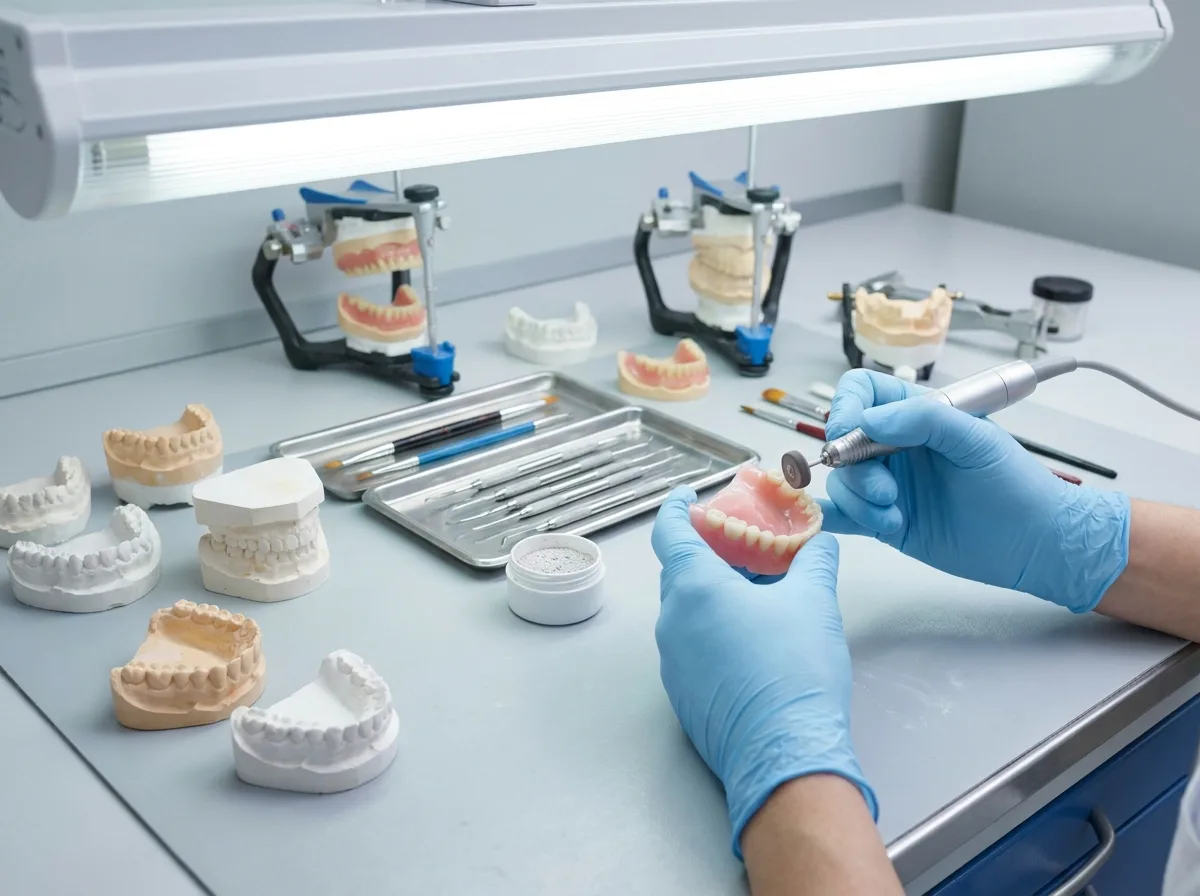
Custom dentures are built in stages over several visits. The number of appointments and the time between them depends on your case, so treat the steps below as a general outline and ask your provider for a schedule that fits your situation. Our guide to how long it takes to get dentures covers timing questions, and what to expect at your first denture appointment describes the opening visit.
| Stage | What usually happens | Why it matters |
|---|---|---|
| Assessment | Your mouth, gums, remaining teeth and health history are reviewed and options are discussed | Confirms what type suits you and whether any dental work comes first |
| Impressions | Moulds of your gums and teeth are taken to make working models | The model is the foundation for fit |
| Bite record | The way your jaws meet and the amount of space between them is recorded | Affects chewing, speech and facial support |
| Try-in | Teeth set in wax are tried in your mouth to check shape, shade and bite | Changes are easiest to make at this stage |
| Finishing | The design is processed into the final base and polished in the laboratory | Gives a smooth, durable finished denture |
| Delivery and follow-up | The denture is fitted, you are shown how to wear and clean it, and adjustments are scheduled | New dentures almost always need fine-tuning |
The clinic runs its own on-site denture laboratory, which means the person who takes your impressions and the people who build your denture work under the same roof. That makes adjustments and repairs easier to coordinate, but how quickly any single step is completed still depends on your case.
Removable Dentures vs Fixed Options
Removable dentures can be taken out for cleaning and usually cost less than fixed options, but they rest on the gums and can move when you chew. Fixed bridges and implant-supported teeth feel more stable but need healthy anchor teeth or enough bone, and they are harder to reverse once placed.
People often phrase this as “fixed versus removable dentures,” but the options are really several separate treatments with different requirements. A dental bridge needs healthy teeth on either side of a gap. An implant needs enough healthy bone and gum. Your dental bridge and implant options are best weighed with a dentist, and a denturist can explain where a removable appliance fits among them.
| Factor | Removable denture | Fixed bridge | Implant-supported teeth |
|---|---|---|---|
| Taken out by you | Yes | No | Fixed versions no, overdentures yes |
| Needs surgery | Not for the denture itself, though extractions may come first | No, but neighbouring teeth are reshaped | Yes, to place the implants |
| Needs healthy anchor teeth | Not for complete dentures, helpful for partials | Yes | No, but needs adequate bone |
| Typical stability | Varies, usually lower on the lower jaw | Stable | Typically the most stable |
| Adjusts as your mouth changes | Relines and rebases are common | Replacement if teeth or gums change | Component work as needed |
| Cost pattern | Generally lower up front | Mid-range | Generally the highest up front |
Cost is a real factor for many households, and we are not going to quote figures that depend on your plan. Our denture cost guide lays out the factors that move the price.
Benefits and Limits of Removable Dentures
What They Do Well
Removable dentures restore chewing surface and support for the lips and cheeks, they let you speak more clearly than with gaps, and they can be repaired or adjusted without surgery. They also let you keep your cleaning routine simple, since you can brush the appliance outside your mouth. For people who are not candidates for surgery, or who simply prefer not to have it, they remain a reasonable and well-established choice.
What They Do Less Well
A removable denture does not stimulate bone the way a natural tooth root does. After tooth loss, the jawbone gradually changes shape, which is why dentures that fit well in the first year can feel loose later. Chewing efficiency is also usually lower than with natural teeth or implants, and very hard or sticky foods can be a challenge. These are normal limits, not signs that something has gone wrong, but they are worth weighing honestly before you decide.
Eating, Speaking and the First Few Weeks
New removable dentures take time to learn. Your cheeks, lips and tongue have to figure out where the appliance sits, and your gums need to get used to the pressure. The CDA says complete dentures can cause soreness at first, and that is a common experience. Our detailed guide to adjusting to new dentures covers the early weeks, and the page on caring for new dentures once they arrive is useful for the first days.
Eating
Start with soft foods cut into small pieces, chew on both sides at once so the denture does not tip, and add firmer foods gradually. Sticky, very hard or crunchy foods are usually the last to feel comfortable. We list ideas in foods to avoid with dentures and how to eat with dentures.
Speaking
Some sounds, especially s and th, can feel different at first because the tongue has a new surface to work against. Reading aloud and speaking slowly usually helps within days to weeks. If a sound stays difficult after the adjustment period, mention it at your follow-up, since small changes to the denture shape can sometimes help.
Sore Spots and Follow-Up Visits
A small sore spot in the first weeks is common and is usually fixed with a quick adjustment. Do not try to file or grind the denture yourself. If a spot persists, look for patterns: it often appears after a specific meal or at one pressure point. Our guide to common denture problems and solutions goes through the usual suspects.
| What you notice | Often normal during adjustment | Worth a call to your provider |
|---|---|---|
| Extra saliva | Yes, for the first days | If it continues for weeks |
| Small sore spot | Yes, in the first weeks | If it lasts more than a few days or keeps coming back |
| Slight lisp | Yes, usually improves with practice | If it does not settle |
| Denture moves when you chew | Some movement early on | If it is getting worse, or came on after months of good fit |
| Cracked or chipped denture | No | Stop wearing it and book a repair |
| Red, shiny or burning tissue under the denture | No | Yes, see a provider promptly |
Looking After Removable Dentures Every Day
Clean removable dentures every day by rinsing off loose food, brushing all surfaces gently with a soft brush and denture cleaner or mild soap, and rinsing well. Remove them overnight and keep them in water so they do not dry out or warp. Never use hot water or regular toothpaste.
That advice follows the CDA’s care guidance. The association also says household cleaners and regular toothpaste are too abrasive for dentures, that plaque and tartar on a denture can cause stains, bad breath and gum problems, and that you should brush under the clasps where bacteria collect. For a step-by-step walkthrough, see how to clean dentures and the clinic’s denture care page.
A Simple Daily Routine
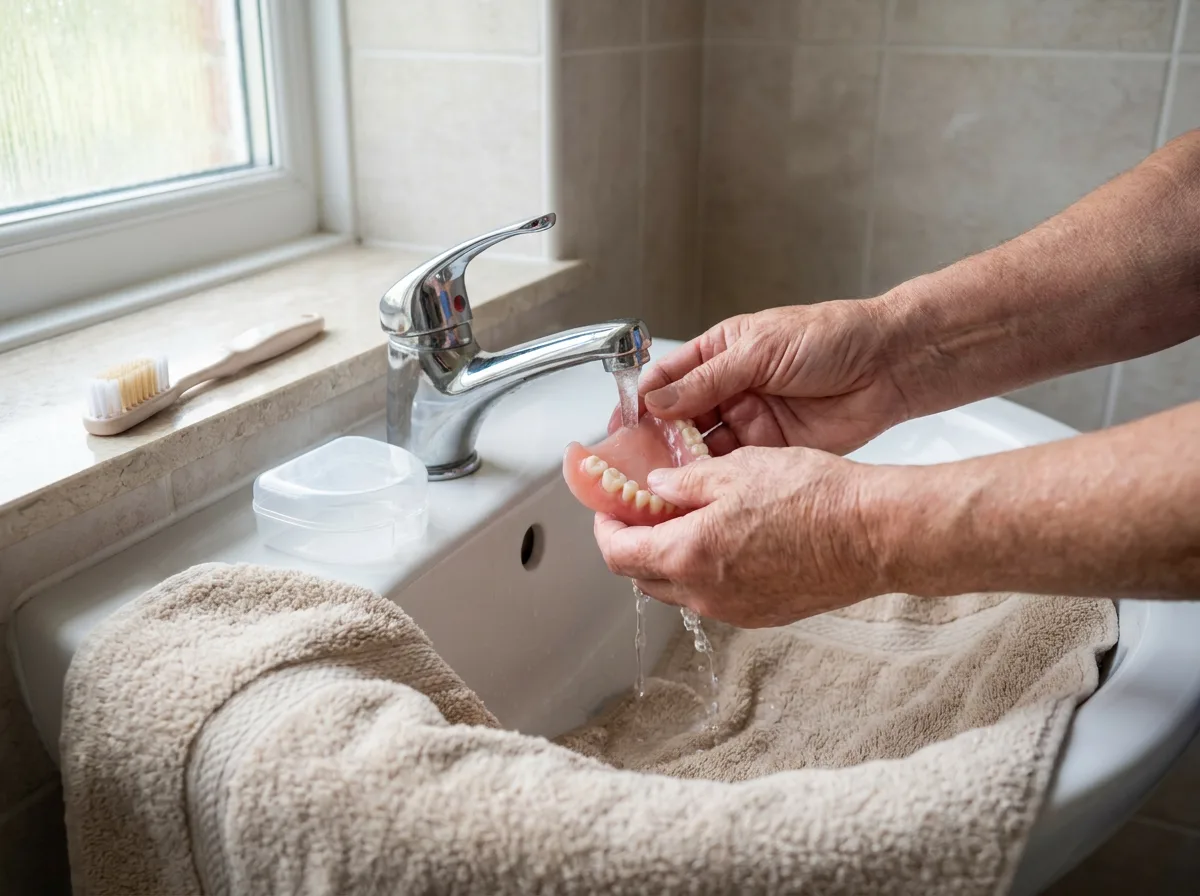
- Stand over a folded towel or a basin of water before you take the dentures out, so a slip does not break them.
- Rinse them under water to remove loose food.
- Brush every surface gently, including the inner side and under the clasps, using denture cleaner or mild soap.
- Clean your gums, tongue and any natural teeth with a soft brush, and floss natural teeth if you wear a partial.
- Soak overnight in water, with or without a denture cleanser. If your denture has metal clasps, plain warm water is safer than some soaking solutions, which can tarnish the metal.
- Rinse well before putting them back in.
Should You Sleep in Your Dentures?
Most guidance recommends taking them out at night to give your gums a rest, and the CDA says the same. Some people have reasons to keep them in short term, for example after an immediate denture is placed, and your provider will tell you if that applies to you. Our article on sleeping with dentures in goes through the trade-offs, and the one on denture stomatitis explains why a rest matters for the tissue under the denture.
Handling and Storage
Dentures can break if dropped or squeezed. Keep them in a labelled case when out of the mouth, away from pets and curious children, and never wrap them in a tissue where they can be thrown away by accident. If you have a relative in a care home, labelling the case and the denture, with the facility’s help, saves a lot of stress.
When Removable Dentures Need a Reline, Rebase or Repair
Your mouth keeps changing after tooth loss, and a denture is a fixed shape. Over time the gap between the base and the tissue grows. The CDA notes that your mouth is always changing, so dentures will need adjusting or relining from time to time, and it recommends seeing a dentist or specialist at least once a year. Poorly fitted dentures may cause sores that make oral cancer harder to spot, which is one of the quieter reasons regular checks matter.
| Option | What it does | Often considered when |
|---|---|---|
| Adjustment | Small changes to remove a pressure point or fix the bite | A sore spot or minor feeling of tightness |
| Reline | Adds new material to the tissue side so the denture fits the gums again | Looseness after gums and bone have changed, or after healing from extractions |
| Rebase | Replaces the pink base while keeping the existing teeth | The base is worn or the fit has changed, but the teeth are still in good shape |
| Repair | Fixes a crack, a chipped tooth or a broken clasp | Damage from a drop or wear |
| New denture | A fresh set made from new impressions | Major changes in fit, wear or appearance |
See our denture relines page and the guide on dealing with a broken denture for how the clinic handles each. If you are wondering how long a set typically lasts before replacement is considered, how long dentures last covers lifespan by type.
Please do not use household glue or home reline kits as a substitute. Our guide to denture repair kits explains why. They can distort the denture, irritate tissue and make a professional repair harder later.
Warning Signs That Need Prompt Attention
Most denture frustrations are about fit and can be fixed with an adjustment. A few signs point to something else and should not wait for your next routine visit:
- A sore, white or red patch that does not heal within about two weeks.
- Persistent burning, redness or swelling of the tissue under the denture.
- A denture that has cracked, broken or has a sharp edge cutting the gum.
- Pain that gets worse instead of settling after an adjustment.
- Trouble swallowing or breathing, or facial swelling with fever. Treat these as emergencies and seek urgent medical care or call 911.
For same-week dental problems that are not life-threatening, the clinic’s emergency dental care page explains what to do. A blog article cannot tell you what is causing a symptom, and only a licensed professional can examine you and advise on treatment.
Cost, Coverage and the Canadian Dental Care Plan
The price of removable dentures depends on the type, the materials, how many visits are needed, whether extractions or other dental work come first, and the follow-up care included. We will not put a number on it here, because any figure that ignores your mouth would be a guess. The Toronto denture cost article breaks down the cost drivers.
On coverage, the federal Canadian Dental Care Plan lists removable prosthodontic services among its covered services. According to the program’s coverage page, that includes complete dentures, including standard and temporary dentures, and denture repairs, relines and rebases. Complete immediate dentures and overdentures, and partial dentures, require preauthorization (Canada.ca: CDCP covered services). Whether you qualify, how much the plan pays, and whether a particular provider takes part are separate questions, so confirm them before treatment starts. Our CDCP denture coverage guide walks through the details, and the clinic’s website says it accepts the plan.
| Cost driver | Why it changes the total | What to ask |
|---|---|---|
| Denture type | Complete, partial, cast frame and flexible designs use different materials and lab time | Which type do you recommend for me, and why? |
| Number of visits | More appointments mean more chair and lab time | How many visits should I expect? |
| Extractions or other dental work | May be needed before dentures can be made | Is anything required first, and who does it? |
| Follow-up care | Adjustments after delivery are common | Are follow-up adjustments included? |
| Coverage or benefits | Plans may cover parts of the cost and need preauthorization | Can you help me check my coverage first? |
| Repairs and relines later | Part of the lifetime cost of a removable denture | How are future relines and repairs handled? |
The clinic’s website also describes support for retired, underemployed and low-income patients. Our low-income dental care page has the current details, and it is worth reading before you assume cost rules you out.
Removable Dentures for Seniors, Caregivers and Long-Term Care
Many people who wear removable dentures are older adults, and many of them have a family member who helps. The practical issues are different from a first-time wearer in their fifties. Dexterity, memory, medications that dry the mouth, and moving between hospital, home and a care facility all affect how well dentures work.
If you are helping someone else, a few habits make a difference. Check that the dentures are in the case at night, look inside the mouth for red or sore areas when you help with brushing, and watch for changes in eating that might signal a poorly fitting set. Label dentures with the person’s name through the care facility’s process so they are not lost in the laundry or a food tray.
Travelling to a clinic is not always possible. The clinic’s website describes mobile denture services for people at home, in long-term care, in hospital or in a retirement residence. Availability and what can be done on a house call depend on your situation, so call ahead to ask. Our page on denture care tips for seniors has more practical advice for caregivers.
Is a Removable Denture Right for You?
There is no universal answer, but some patterns help frame the conversation.
Situations Where Removable Dentures Are Commonly Considered
- You are missing several teeth, or all of them, and want a non-surgical starting point.
- Your remaining teeth are not strong enough to anchor a bridge. The CDA notes that partial dentures may be used when nearby teeth cannot hold a bridge, or when more than just a few teeth are missing.
- You are waiting for gums to heal before a longer-term option.
- Health, age or personal preference make surgery less appealing.
Situations Where You May Want to Ask About Alternatives
- You have had repeated problems with looseness or sores on a lower complete denture.
- You want the feel of teeth that stay in while you eat and sleep.
- You are missing only one or two teeth and have healthy teeth on both sides.
Choosing not to proceed, or choosing to wait, is also a legitimate decision. A good provider will explain risks and trade-offs without pressure, including what is likely to happen if you do nothing for now.
Questions to Bring to Your Assessment
A short list on your phone is more useful than it sounds. These questions cover most of what people wish they had asked afterwards.
- Which type of removable denture do you recommend for my mouth, and what are the alternatives?
- What will change in my bite, speech and appearance, and how long does it usually take to adjust?
- Do I need any extractions or dental work first, and who will do it?
- How many appointments are expected, and what is included in follow-up?
- How do you handle relines and repairs, and what do they usually involve?
- What does my plan or benefit program cover, and do you need preauthorization?
- Is a home or care-facility visit possible if I cannot travel?
The clinic’s website currently describes a no-obligation initial denture and dental care consultation, so you can raise these questions before you commit to anything.
Booking a Consultation
The clinic is in North York near Bathurst Street and Sheppard Avenue and serves patients across Toronto. If you are thinking about removable dentures, a first conversation can clarify what is realistic for you. You can contact the clinic to ask about an appointment, bring your questions, and share any health or mobility needs so the right plan can be built around you.
Frequently Asked Questions About Removable Dentures
What are removable dentures?
Removable dentures are custom-made replacement teeth on a gum-coloured base that you can take out and put back in yourself. They can replace a few teeth as a partial denture or every tooth in an arch as a complete denture, and they are made from impressions of your mouth.
How long do removable dentures last?
It varies with the type, materials, care and how much your gums and bone change. Many sets need relines or repairs along the way and are replaced when wear or fit can no longer be corrected. Your provider can give a realistic range after examining your mouth.
Can you eat with removable dentures?
Yes, though it takes practice. Start with soft foods in small pieces, chew on both sides, and add firmer foods gradually. Chewing power is usually lower than with natural teeth, and very hard or sticky foods are often the last to feel comfortable.
Which is better, fixed or removable dentures?
Neither is better for everyone. Fixed options feel more stable but need healthy anchor teeth or enough bone and are harder to reverse. Removable dentures are less invasive, easier to clean and adjust, and often cost less up front. A dentist or denturist can explain which fits your situation.
What are the downsides of removable dentures?
They can move when you chew, especially on the lower jaw. They need daily cleaning, periodic relines as your mouth changes, and they do not preserve bone the way implants can. Some people also find them bulky at first. Most of these are manageable with good fit and care.
What can you never eat again with dentures?
There is no universal list. Most people can return to a wide range of foods over time, though very hard, sticky or chewy items like whole nuts, caramel or tough steak can stay difficult. Ask your provider which foods to approach slowly given your type of denture.
Why can’t I close my lips with dentures?
If the denture feels too bulky, it may be too thick, too tall or set too far forward, or your lips and cheek muscles may still be adjusting. Mention it at your follow-up, because a provider can often adjust the shape. Do not alter the denture yourself.
What should you not drink with dentures?
You do not have to avoid specific drinks, but very hot liquids can warp some denture materials and strongly coloured drinks such as coffee, tea or red wine can stain them. Rinse after drinking and keep up daily cleaning. Hot water should not be used to soak or clean them.
Will I ever be able to eat a hamburger with dentures?
Many wearers eventually manage a hamburger by cutting it smaller or flattening it, especially with a well-fitted upper denture. How comfortable it feels depends on your fit, your lower jaw and whether implants or adhesive are involved. Build up gradually.
Can you sleep with removable dentures in?
Most guidance recommends removing them at night so your gums can rest and your dentures can soak. There are exceptions, such as shortly after an immediate denture is placed, and your provider will tell you whether that applies to you.
How do you clean removable dentures?
Rinse off loose food, brush all surfaces gently with a soft brush and denture cleaner or mild soap, rinse well, and soak overnight in water. Avoid regular toothpaste, household cleaners and hot water. Clean under any clasps, and clean your gums and natural teeth too.
How much do removable partial dentures cost in Canada?
The price depends on the design, materials, number of visits and any dental work needed first, so there is no single figure that applies to everyone. Ask your provider for a written treatment plan, and check whether your benefits require preauthorization before treatment.
Does the Canadian Dental Care Plan cover removable dentures?
The plan’s coverage page lists complete dentures, repairs, relines and rebases, with preauthorization listed for immediate dentures, overdentures and partial dentures. Eligibility, payment amounts and provider participation vary, so check the details with the plan and your provider before treatment.
Can removable dentures be repaired?
Often, yes. Cracks, chipped teeth and broken clasps can frequently be repaired, and loose fit can be corrected with a reline or rebase. Stop wearing a broken denture, keep all the pieces, and avoid household glue, which can make a professional repair harder.
Are removable dentures painful?
They should not be painful once properly adjusted, but some soreness or pressure spots are common in the first weeks and are usually fixed with an adjustment. Pain that gets worse or does not improve after adjustment should be examined by your provider.
Can a removable denture be upgraded to implants later?
Sometimes. Depending on your bone, gums and health, a denture can be converted into an overdenture supported by implants, or replaced with a new design. This needs an assessment and coordination between your denturist and the clinician who places the implants.
Do removable dentures change how you look?
They support the lips and cheeks, so a well-made set can restore a more natural facial contour than a mouth with missing teeth. A poorly fitting set can have the opposite effect. Tell your provider what you want the final appearance to be.
Can a denturist make removable dentures in Ontario?
Yes. Denturists are regulated by the College of Denturists of Ontario, and making, fitting and adjusting removable dentures is central to their work. Extractions, implant surgery and medication fall under dentistry, so you may see both professionals for a full treatment plan.
Editor’s note: This article includes three images generated for this post with Higgsfield marketing_studio_image. Hero/featured image: “removable-dentures-denturist-consultation-denture-set.webp” (1376x768px, WebP, ~159KB), titled “Denturist explaining removable dentures to an adult patient,” alt text “Denturist showing an adult patient an upper and lower removable denture set in a case during a consultation,” caption “A consultation is the time to ask which type of removable denture suits your mouth and what the alternatives are.” Generated at 16:9 with the prompt: “Realistic dental clinic photograph: a friendly denturist in clean scrubs sitting across a small table from a smiling older adult patient in a bright, modern consultation room, the table holds a clean upper and lower removable denture set resting in an open denture case, the denturist gently points to the denture while explaining how it fits. Warm natural window light, tasteful clinical decor, no visible logos or text, no procedure being performed, respectful calm mood, anatomically accurate hands and faces, high detail, professional photography style.” Placement: featured image only, not duplicated inline.
Inline image 1: “denture-laboratory-technician-finishing-acrylic-denture.webp” (1200x896px, WebP, ~60KB), titled “Technician finishing an acrylic complete denture at a laboratory bench,” alt text “Laboratory technician finishing a pink acrylic complete denture with white teeth at a clean denture lab bench,” caption “Removable dentures are built on models of your mouth and finished by hand in the laboratory.” Generated at 4:3 with the prompt: “Realistic photograph of a clean denture laboratory bench: a technician’s gloved hands carefully finishing a pink acrylic removable complete denture with a set of white denture teeth, plaster working models and dental tools neatly arranged, bright even lighting, no blood, no visible text or logos, hygienic professional atmosphere, high detail, professional photography style.” Placement: How Removable Dentures Are Made section.
Inline image 2: “rinsing-removable-upper-denture-over-water-basin.webp” (1200x896px, WebP, ~83KB), titled “Rinsing a removable denture over a basin of water,” alt text “Adult hands rinsing a removable upper denture over a towel-lined basin of water beside a soft brush and case,” caption “Rinsing over a water-filled basin or folded towel protects a denture if it slips during cleaning.” Generated at 4:3 with the prompt: “Realistic photograph of adult hands gently rinsing a removable upper denture over a basin of water lined with a folded towel in a bright bathroom, a soft denture brush and a clear denture case on the counter, calm everyday oral-care routine, soft natural light, no visible text or logos, anatomically correct hands, high detail, professional photography style.” Placement: Looking After Removable Dentures Every Day section.
Suggestions for a human designer and dental reviewer: a labelled diagram of the parts of a partial and a complete denture, a one-page decision aid comparing removable, fixed and implant-retained options, a printable daily care checklist, and a caregiver card for long-term-care staff would extend this piece well. AI image models are unreliable for anatomy and chart text, so these are best built by a qualified designer and reviewed clinically. The generated images have not been reviewed by a person for denture anatomy, so please check them before wider promotion.
Leave a Reply
You must be logged in to post a comment.