
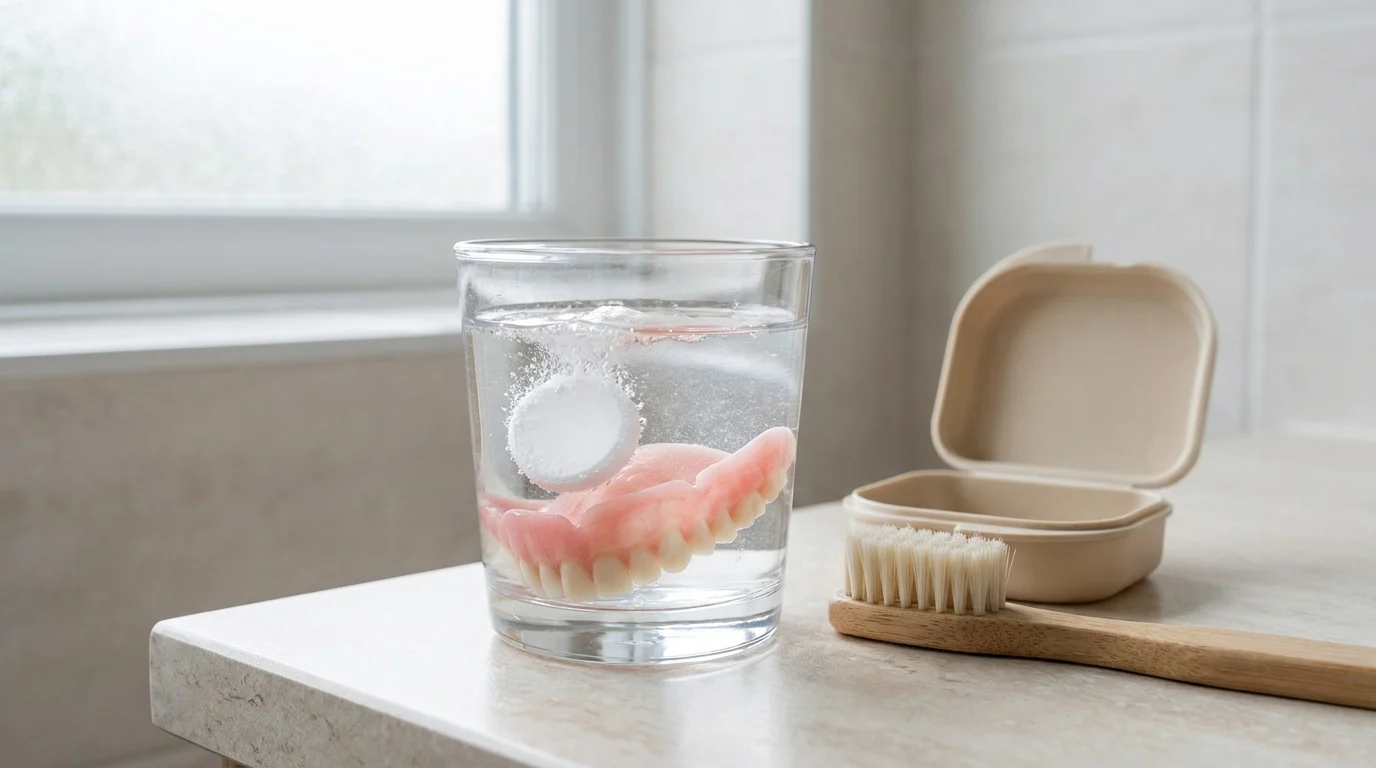
Denture Cleaning Tablets: Do They Work, How to Use Them, and What They Can’t Do
Most people who wear removable dentures have stood at a pharmacy shelf looking at boxes of fizzy cleaning tablets and wondering whether they are worth it. They are easy to use and they are everywhere, but it is fair to ask what they actually do, how long to leave a denture in the glass, and whether a tablet can replace brushing.
This guide covers how denture cleaning tablets work, a step-by-step way to use them, how long to soak, what to avoid (including bleach and hot water), what tablets cannot fix, and how to handle partial dentures with metal clasps, night guards and implant-supported dentures. There is also a section for family caregivers and a plain list of signs that a denture needs a professional rather than another soak.
This is general education, not a diagnosis or personal dental advice. What suits your denture depends on its material, its fit and the health of your mouth, so ask your denturist or dentist about your own situation. If a product label and this article ever disagree, follow the label and your clinician.
Do Denture Cleaning Tablets Work?
Denture cleaning tablets work as a soaking cleanser. They fizz in water and loosen food debris and film on a denture, which makes daily cleaning easier. They do not replace brushing, and they cannot fix a denture that fits poorly, has hardened buildup or is cracked.
Think of a tablet as one step in a routine rather than the whole routine. Mayo Clinic’s denture care advice, for example, tells wearers to brush their dentures daily with a soft-bristled brush and a cleanser that is not harsh or abrasive, and to soak them in water or a mild denture-soaking solution overnight. You can read the full wording on the Mayo Clinic denture care page. The Ontario Dental Association’s tips for seniors and caregivers also stress cleaning dentures twice a day after taking them out, and they are available in its caring for dentures guide.
So the honest answer is yes, a tablet can help, as long as it sits alongside brushing, rinsing and regular checkups. If your denture keeps feeling dirty even after a good routine, the cause is often something a tablet cannot touch, such as a rough surface, a poor fit or a build-up that needs a professional polish. Our guide to how to clean dentures covers the wider routine.
Denture Cleaning Tablets at a Glance
The table below pulls the main points into one place. It is a summary of general guidance, so treat it as a map and check the product label for the exact instructions that come with your tablets.
| Question | Short Answer | Worth Knowing |
|---|---|---|
| What does a tablet do? | Helps loosen debris and film while the denture soaks | It supports brushing and does not replace it |
| How long should I soak? | Follow the time on your product label | Labels differ between short soaks and overnight soaks |
| Can I leave it in overnight? | Only if the label says so, and only in the way your clinician advises | Sources differ on dry versus wet storage, so ask your denturist |
| Do I rinse after soaking? | Yes, thoroughly, before the denture goes back in your mouth | Mayo Clinic says to rinse well, especially after using a soaking solution |
| Is hot water okay? | No | Mayo Clinic advises against hot or boiling water |
| Can I use bleach? | No | Mayo Clinic says bleach can weaken dentures and change their color |
| Do tablets remove hard tartar? | Do not count on it | Hardened deposits are a reason to book a visit |
| Is a tablet safe for a partial with metal clasps? | Check the label and ask your denturist | Some soaking products can affect metal parts |
What Is Actually in a Denture Cleaning Tablet?
Most tablets are built around the same idea. When one drops into water it releases bubbles, and the cleaning agents mixed into it spread through the glass. Ingredient lists vary from brand to brand and change over time, but tablets often combine an effervescent base, such as baking soda and citric acid, with other cleaning agents. Because the formulas differ, the label is the only reliable guide for your product.
Why the Fizz Matters Less Than You Think
The bubbling looks impressive, and that is part of the appeal. The soak itself is the useful part. Time in the solution lets the cleanser reach grooves and the fitting surface that a brush can miss. It still will not scrub away anything that has bonded to the plastic, so the brush stays in the routine.
Tablets, Pastes, Creams and Soaks Compared
Tablets are only one type of denture cleaner. The right choice often comes down to how you like to clean and what your denture is made of.
| Cleaning Option | How It Is Used | Good For | Keep in Mind |
|---|---|---|---|
| Cleaning tablet | Dissolved in a glass of water, denture soaked, then brushed and rinsed | A simple soaking step in a daily routine | Does not replace brushing |
| Denture paste or cleanser | Applied to a soft brush and used on the denture | Everyday brushing | Avoid harsh or abrasive products |
| Mild soap and water | Liquid hand soap on a soft brush | A gentle daily clean | The ODA guide lists liquid hand soap or denture toothpaste |
| Regular toothpaste | Brushed on the denture | Not recommended | The ODA guide says toothpaste may scratch the denture |
| Household bleach | Soaked or wiped | Not recommended | Mayo Clinic says bleach can weaken dentures and change their color |
If you are comparing options for a particular denture, such as a flexible denture or a denture that has been relined, ask your denturist which cleaners they would choose, since materials can react differently to different products.
How to Use Denture Cleaning Tablets, Step by Step
The steps below follow the general advice from Mayo Clinic and the Ontario Dental Association. Your product label comes first, so use these as a checklist around it.
Before You Start
Take the denture out of your mouth first. Stand over a sink with a folded towel or a little water in the basin so the denture will not break if it slips. Rinse it under cool running water to wash away loose food. If you use adhesive, clean the grooves that sit against your gums, because leftover residue builds up there. Our post on denture adhesive explains how much is too much.
The Soak
Fill a clean cup or glass with cool or lukewarm water, never hot, and drop in the tablet as the label directs. Place the denture in once the tablet has dissolved or started to fizz, as your instructions say. Make sure the denture is fully covered. Leave it for the time printed on your pack. Do not use the same glass for drinking afterward, and label it so no one in the household picks it up by mistake.
Brush and Rinse
After the soak, brush the denture gently with a soft denture brush or soft toothbrush. Mayo Clinic advises against stiff bristles, strong cleansers and harsh toothpaste, and the ODA guide says regular toothpaste may scratch the denture. Then rinse it thoroughly under running water before it goes back in your mouth. Denture cleansers are not meant to be used inside the mouth, so a careful rinse matters.

Clean Your Mouth Too
While the denture soaks, look after the tissue it rests on. Both Mayo Clinic and the ODA suggest cleaning your gums and mouth with a soft, moist toothbrush or gauze, including your tongue, cheeks and the roof of your mouth. Check for sore spots at the same time. A red or sore patch that does not settle is worth a call, and our guide to denture stomatitis explains one common cause.
How Long Should You Leave a Denture in a Cleaning Tablet?
Leave the denture in for the time printed on your product’s label. Many tablets are made for a short soak of a few minutes, and some are made for an overnight soak. Soaking longer than the label says is not a way to clean better, and it can affect some materials.
Since labels differ, a single number would not be accurate for every product. Read the box, set a timer for the stated soak, and rinse the denture well afterward. If your tablet is labeled for overnight use and you wear dentures during the day, many people find this the easiest habit to keep.
| Soak Type | When People Use It | What to Check |
|---|---|---|
| Short soak (minutes) | Midday or after a meal when the denture needs a quick refresh | The exact time on the label |
| Overnight soak | Bedtime routine, with the denture out of the mouth | That the product is labeled for overnight use |
| Dry overnight storage | Some clinicians advise giving gum tissue a rest with the denture stored dry | Ask your denturist which method suits your denture |
Wet or Dry Overnight? Why Advice Differs
You may find that two respected sources give different answers here. Mayo Clinic notes that dentures usually need to stay moist to keep their shape and advises soaking them overnight in water or a mild denture-soaking solution, while the ODA guide for seniors advises storing dentures dry overnight to allow the mouth time to rest. Both sources agree that the denture should be out of your mouth to be cleaned, and Mayo Clinic suggests checking with your dentist about the best way to store yours. Our article on whether you should sleep with dentures in goes deeper into night-time habits, and your denturist can tell you what works for your denture type.
What Not to Do With Denture Cleaning Tablets
A few small mistakes account for most of the damage that cleaning habits cause. None of them are hard to avoid once you know them.
| Common Mistake | Why It Matters | What to Do Instead |
|---|---|---|
| Using hot or boiling water | Mayo Clinic advises against it for soaking dentures | Use cool or lukewarm water |
| Adding bleach | Mayo Clinic says bleach can weaken dentures and change their color | Use a product made for dentures |
| Using a tablet inside the mouth | Mayo Clinic says not to use denture cleansers inside your mouth | Rinse the denture thoroughly before it goes back in |
| Skipping the brush | A soak alone may leave film in grooves | Brush gently with a soft brush after soaking |
| Brushing with stiff bristles or harsh toothpaste | Scratches can hold more film and stain | Use a soft brush and a gentle cleanser |
| Dropping the denture over a hard sink | Dentures can crack or chip | Put a towel or some water in the sink |
| Soaking metal parts in chlorine solutions | Mayo Clinic says chlorine can tarnish and wear metal attachments | Ask your denturist about any partial with metal |
Home Remedies and Hacks
You will see plenty of advice online about soaking dentures in vinegar, hydrogen peroxide or other household products. The sources we checked do not endorse these, and the effect on a particular denture depends on its materials. If you are tempted to try something, ask your denturist first, and do not mix products.
What Denture Cleaning Tablets Cannot Do
A tablet is a cleanser, not a repair. Several denture problems can look like a cleaning problem when they are really something else, and soaking longer or switching brands will not solve them.
Hardened Buildup and Tartar
Many wearers search for ways to remove hard, chalky deposits from a denture. A tablet works on what soaking can loosen, and hardened buildup is a different problem. Scraping at it with a pick or a rough tool can scratch the surface and make it worse. If you notice rough, yellow or chalky patches that do not brush away, bring the denture in for a professional assessment.
Stains
Coffee, tea, red wine and tobacco can stain denture acrylic over time. A tablet may help lift surface film, but deeper discoloration is often a sign of a worn surface or an aging denture. Our guide on how long dentures last explains why colour, fit and wear all change with age. Mayo Clinic also notes that whitening toothpaste does little to change denture colour.
Odour
A denture that smells even after a good clean may be telling you something. Residue under the denture, a rough surface, or irritation in the mouth can all play a part, and none of these are fixed by a stronger soak. Raise it at your next visit, particularly if the tissue under the denture looks red or feels sore.
Loose, Cracked or Rubbing Dentures
No cleaning product can restore a loose fit. Mayo Clinic notes that loose dentures can cause irritation, sores and infection and that a reline may help. If food keeps slipping under your denture, or you use more adhesive than you used to, read our guide on the denture reline and book an assessment. A cracked or chipped denture should not be repaired at home either. Our article on denture repair kits explains why a professional repair is usually the safer route.
Cleaning Tablets for Different Types of Dentures
A tablet that is fine for one denture may not suit another. Materials, metal parts and the way a denture attaches all affect what is sensible. The table gives a starting point, and your clinician has the final word.
| Denture Type | What to Check Before Using a Tablet | Where to Learn More |
|---|---|---|
| Complete (full) dentures | The product label, and cool or lukewarm water only | Complete dentures |
| Partial dentures with metal clasps | Whether the product is suitable for metal parts, since Mayo Clinic warns about chlorine soaks and metal attachments | Partial dentures guide |
| Flexible dentures | Which cleaners your denturist recommends for the material | Caring for flexible dentures |
| Implant-supported dentures | Whether yours is removable and what your clinician advises for the attachments | Cleaning implant-supported dentures |
| Newly relined or repaired dentures | Any instructions your clinic gave you after the visit | Denture reline guide |
Partial Dentures and Metal Clasps
Many partial dentures use small metal clasps to grip nearby teeth. Mayo Clinic advises against soaking dentures that have metal attachments in chlorine solutions, because they can tarnish and wear the metal. Since tablet formulas differ, read the ingredients and ask your denturist whether your product is a sensible choice. Our post on partial dentures shows how they are built, and the clinic’s partial dentures page describes what the clinic offers.
Implant-Supported and Snap-In Dentures
If your denture clips onto implants, the attachment parts need gentle, regular cleaning, and your clinician will tell you which products to use. The ODA guide also notes that if you cannot remove what you think is a denture, you should not pull on it, because it may be implant-retained, and a dental professional should be consulted. Read our overview of removable dentures for how removable options differ from fixed ones.
Night Guards and Retainers
Searches for tablets that can clean a night guard are common. Night guards and retainers are made from different plastics than dentures, so check the manufacturer’s care instructions or ask the clinic that made yours before you try a denture tablet. Our guide to night guards for teeth grinding covers their care, and the clinic’s mouth guards page lists what it provides.
A Simple Daily Denture Routine
Most people do best with a routine short enough to repeat without thinking. A common pattern looks like this, adapted from the ODA and Mayo Clinic advice above.
| When | What to Do |
|---|---|
| After meals | Take the denture out if you can, rinse away food over a towel-lined sink, and rinse your mouth |
| Morning | Rinse the denture, brush gently, clean your gums and tongue, and place it back in |
| Evening | Remove the denture, brush it, then soak it in the way your clinician and product label advise |
| Each day | Check your gums for sore, red or swollen spots |
| At least yearly | See a dentist or denturist so your fit and mouth can be checked |
If your routine feels like too much, our guide to caring for new dentures breaks it into smaller habits, and the clinic’s denture care page describes the services behind it.
When Cleaning Is Not the Problem: Signs to See a Professional
A good routine should keep a denture feeling fresh. When it does not, the cause may be fit, wear or tissue health. Use this table as a guide, not a diagnosis.
| What You Notice | It May Point To | Suggested Step |
|---|---|---|
| A bad taste or smell that returns after cleaning | Buildup, a rough surface or tissue irritation | Book a denture check |
| Hard, chalky or yellow patches that will not brush off | Hardened deposits | Bring the denture in for a professional clean |
| Food slipping under the denture, or extra adhesive needed | A change in fit | Ask about a reline |
| A sore, red or burning area under the denture | Irritation from fit or hygiene problems | Make an appointment promptly |
| Cracks, chips or a broken clasp | Damage that needs repair | Stop wearing it and call the clinic |
| Cloudy, rough or heavily stained surface | Wear or scratches | Ask whether polishing or replacement makes sense |
Some warning signs are urgent. If you have significant facial swelling, a fever with swelling, bleeding that will not stop, or trouble breathing or swallowing, seek urgent or emergency medical care rather than waiting for a denture appointment. For a broken denture that cannot wait, see our guide to dealing with a broken denture.
Cleaning Dentures for a Parent or Family Member
For many families, denture cleaning becomes a shared task. Someone with arthritis, memory changes or limited vision may find a tablet and brush routine hard to manage alone. The ODA guide for seniors and caregivers suggests encouraging seniors to remove and clean their own dentures and supporting care where needed, and it advises caregivers to wear gloves to prevent cross-contamination.
Making the Routine Easier
A few practical changes help. Keep the soaking cup, brush and tablets together in one place. Use a cup with a lid and a clear label. Set the soak at the same time each night so it becomes automatic. Go slowly, keep conversation calm, and check the gums for sore spots each time the denture is out. Our guide to denture care for seniors has more ideas for older wearers.
When Getting to a Clinic Is Hard
If travel is the barrier, the clinic’s mobile denture services page says it provides house call service in a patient’s home, a long-term care facility, a hospital or a retirement residence. You can read more about it in our post on why you might try mobile denture services. Which treatments can be done at the bedside depends on the situation, so ask the clinic about yours.
Questions to Ask Your Denturist About Cleaning
A short chat at a checkup can save a lot of trial and error. Whether you wear a first denture or a fifth, these questions help you leave with a routine that suits your mouth.

| Question | Why It Is Worth Asking |
|---|---|
| Which cleaner is right for my denture material? | Acrylic, flexible materials and metal parts can respond differently |
| Should I store my denture wet or dry overnight? | Reputable sources differ, so your clinician can advise for your case |
| Is my current routine too harsh or too gentle? | Scratches and film can both come from the wrong tools |
| Does my denture need polishing or a professional clean? | Some buildup cannot be removed at home |
| Does my fit still look right? | Fit can change as the mouth changes, which may call for a reline |
| How often should I come in for a checkup? | Mayo Clinic and the ODA both recommend regular dental visits for denture wearers |
If your denture has begun to feel different, our guide on adjusting to new dentures and our post on common denture problems can help you describe what you are noticing. For questions about whether a dentist or a denturist is the right person to see, read denturist vs. dentist.
A Gentle Next Step
If your denture is stained, smelly, rough or loose, or you are not sure that your cleaning routine is helping, you do not have to figure it out alone. You can call the clinic at 647-294-3310 or use the contact page to ask about a denture check, a reline or a repair, and about mobile visits if travel is hard. The clinic’s mobile services page says it offers a no-obligation free initial denture and dental care consultation. The clinic also states that it accepts the Canadian Dental Care Plan, and our guide to CDCP coverage for dentures explains what the plan lists. Nothing in this article replaces an exam, and it is fine to take your time.
Frequently Asked Questions
Do denture cleaning tablets work?
Yes, as part of a routine. A tablet soaks loose food debris and film off a denture, which makes brushing easier. It does not replace brushing, and it cannot fix a poor fit, hardened buildup or a cracked denture. Ask your denturist about your own denture.
How long do you leave denture cleaner tablets in?
Follow the time on the product label. Some tablets are made for a short soak of a few minutes and others for an overnight soak. Leaving a denture in longer than the label says does not clean better and may affect some materials.
Can I leave my dentures in a cleaning tablet solution overnight?
Only if the product is labeled for overnight use. Mayo Clinic advises soaking dentures overnight in water or a mild denture-soaking solution, while the Ontario Dental Association guide for seniors advises storing them dry. Ask your denturist which method suits your denture.
Can I use a denture tablet instead of brushing?
No. Both Mayo Clinic and the Ontario Dental Association describe brushing as part of daily denture care. A soak helps loosen debris, and a soft brush removes what remains from grooves and surfaces. Brushing also lets you spot chips, cracks and rough areas early.
Do denture cleaning tablets remove tartar or hardened plaque?
Do not count on it. A tablet works on what soaking can loosen, and hardened deposits are a different problem. Scraping at them can scratch the denture. If you see hard, chalky patches, bring the denture to your denturist for a professional assessment.
What do dentists recommend for cleaning dentures?
Mayo Clinic and the Ontario Dental Association suggest removing the denture, brushing it gently with a soft brush and a gentle cleanser, rinsing well, and cleaning the mouth and gums too. Mayo Clinic also suggests an overnight soak, and the ODA suggests dry storage, so ask your own clinician.
Can I use hot water to dissolve the tablet?
No. Mayo Clinic advises against soaking dentures in hot or boiling water. Use cool or lukewarm water, as your product label directs, and rinse the denture well before it goes back into your mouth.
Can I use bleach on my dentures?
No. Mayo Clinic says products that contain bleach can weaken dentures and change their color. Use a product made for dentures, and ask your denturist before trying any household product on your denture.
Do I need to rinse dentures after soaking them in a tablet solution?
Yes. Mayo Clinic advises rinsing dentures thoroughly before putting them back in your mouth, especially after using a denture-soaking solution, and notes that denture cleansers are not for use inside the mouth.
Can I use denture tablets on a partial denture with metal clasps?
Check first. Mayo Clinic advises against soaking dentures with metal attachments in chlorine solutions, because they can tarnish and wear the metal. Read the tablet’s ingredients and ask your denturist whether your product is suitable for your partial.
Can I clean a night guard or retainer with a denture tablet?
It depends on the material. Night guards and retainers are not always made from the same plastics as dentures, so check the manufacturer’s instructions or ask the clinic that made yours before you use a denture tablet on one.
Can I use denture tablets on implant-supported dentures?
Only on a removable denture, and only as your clinician advises. The attachments need their own gentle cleaning. If you cannot remove your denture, do not pull on it, since it may be implant-retained, and ask a dental professional.
How often should I clean my dentures?
The Ontario Dental Association guide says to clean dentures twice a day, and Mayo Clinic says to brush them at least daily. Rinse after meals when you can. A soak in the evening is a common habit, as long as it follows the label and your clinician’s advice.
Can I use regular toothpaste on my dentures?
It is best not to. The Ontario Dental Association guide says toothpaste may scratch the denture, and Mayo Clinic advises against harsh toothpaste. Use a soft brush with liquid hand soap, a denture-specific cleanser or the product your clinician recommends.
Can I soak dentures in vinegar or hydrogen peroxide?
The sources we checked do not recommend these, and the effect on your denture depends on its materials. Ask your denturist before trying a home remedy, and never mix household cleaning products.
Why do my dentures still smell after cleaning?
Residue, a rough surface, hardened buildup or irritated tissue can all play a part, and a stronger soak will not fix those. Mention the smell at your next visit, and sooner if the tissue under the denture looks red or feels sore.
Should I wear my dentures at night?
That is a question for your own clinician, since advice depends on your mouth and your denture. Both Mayo Clinic and the ODA guide describe giving the mouth time without the denture overnight. Our article on sleeping with dentures in explores the topic in depth.
When should I see a denturist instead of cleaning my denture again?
See a professional if you notice sore or red tissue, a loose fit, cracks, hard deposits, or a smell that returns. Seek urgent medical care for significant facial swelling, fever with swelling, uncontrolled bleeding, or trouble breathing or swallowing.