

Denture Repair Kits: Do They Work, and When Should You See a Denturist Instead?
It usually happens at the worst moment. A denture slips out of your hand at the sink, a tooth pops off in the middle of dinner, or you find a hairline crack you swear was not there yesterday. The nearest pharmacy sells a little box that promises to fix it in minutes, and it is tempting to just buy one and move on.
A denture repair kit is an over-the-counter product, usually a small bonding material with a few instructions, sold to patch a cracked denture or reattach a loose tooth at home. This guide explains what these kits are, what they can realistically do, where they fall short, what to do in the first hour after a break, and when a visit to a denturist is the better call. We also cover repair versus reline, rebase and replacement, plus cost and coverage questions.
Everything here is general education, not a diagnosis or personal dental advice. Whether a particular denture can be repaired depends on the damage, the material, the fit and your mouth, and that takes a hands-on look from a licensed professional. Use this page to understand your options and to prepare for that conversation.
What is a denture repair kit?
A denture repair kit is a consumer product, sold in pharmacies and online, that usually contains a bonding material and applicator meant to hold a cracked denture together or reattach a detached tooth. Most are intended as a temporary measure until you can see a denturist or dentist for a proper repair.
Worn or chipped teeth are a common reason people reach for a kit. Our guide to denture teeth types explains how different tooth materials wear and what repair usually involves.
If you search for one, you will notice the results are mostly shopping listings. In a Toronto-area Google search for this topic, the first screen was dominated by product cards from large online retailers, with listed prices running from roughly $8 to $70 CAD at the time of writing. Very few results came from clinics, which is part of why people end up guessing about what these products can and cannot do.
What is usually in the box
Contents vary by brand, so always read the label on the specific product. Many kits include a small amount of bonding compound, sometimes a liquid and powder to mix, plus a tool to apply it. Some products sold nearby on the shelf are not repair kits at all. Reline kits and “temporary tooth replacement” beads are different products with different purposes, and mixing them up is a common source of trouble.
What kits are designed to do
The marketing language tends to focus on three jobs: sealing a crack, reattaching a tooth that has come loose, and filling a gap. A kit is a stopgap for those problems, not a replacement for the lab-grade materials and equipment a denturist uses. The Canadian Dental Association advises that if you find cracks in your dentures, you should take them to your dentist or specialist for repair, and that guidance is a good starting point for the rest of this article.
Do denture repair kits actually work?
Sometimes, and only for a short time. A kit may hold a clean break together for a few days so you can eat and speak until your appointment, but the repair is rarely as strong as a professional one, and it can make later repair harder. Treat it as a temporary bridge, not a fix.
Results vary a lot. Reviews for popular kits are mixed, which fits what you would expect from a one-size-fits-all product used on many different denture shapes and materials. Here is how it tends to play out in practice.
When a kit may hold for a short while
A kit has the best chance when the break is clean, the pieces fit back together without gaps, the denture is dry and clean, and the damaged area does not take heavy chewing pressure. Even then, the bond is usually described as temporary on the packaging, and your denture still needs to be examined for fit and any hidden damage.
Why home repairs often fail
Dentures take a lot of force every time you chew, and they sit in a warm, wet environment. A repair done at the kitchen table has to survive that without lab clamping, controlled curing, or precise alignment. If the pieces are off by even a small amount, the denture can sit slightly out of shape, which changes the fit against your gums and bite. That can lead to sore spots, a loose feel, or a second break close to the first. Our guide to common denture problems and solutions covers several of these knock-on effects.
Kits are not the same as reline or “make your own teeth” products
Some of the products that show up next to repair kits are designed to change the shape of the denture, such as soft reline kits, or to build replacement teeth from beads. Altering the surface that touches your gums can create pressure points, trap bacteria, and hide a fit problem that needs a professional look. A proper reline is done by a denturist using materials made for the purpose, which we explain in our denture reline service page and in the cost guide to denture relines. Our guide to denture relines covers the hard, soft and temporary options in more detail.
What to do first when a denture breaks
The first hour matters more than people realize, because a few simple choices can keep a repairable denture repairable. Here is a sensible order to follow.
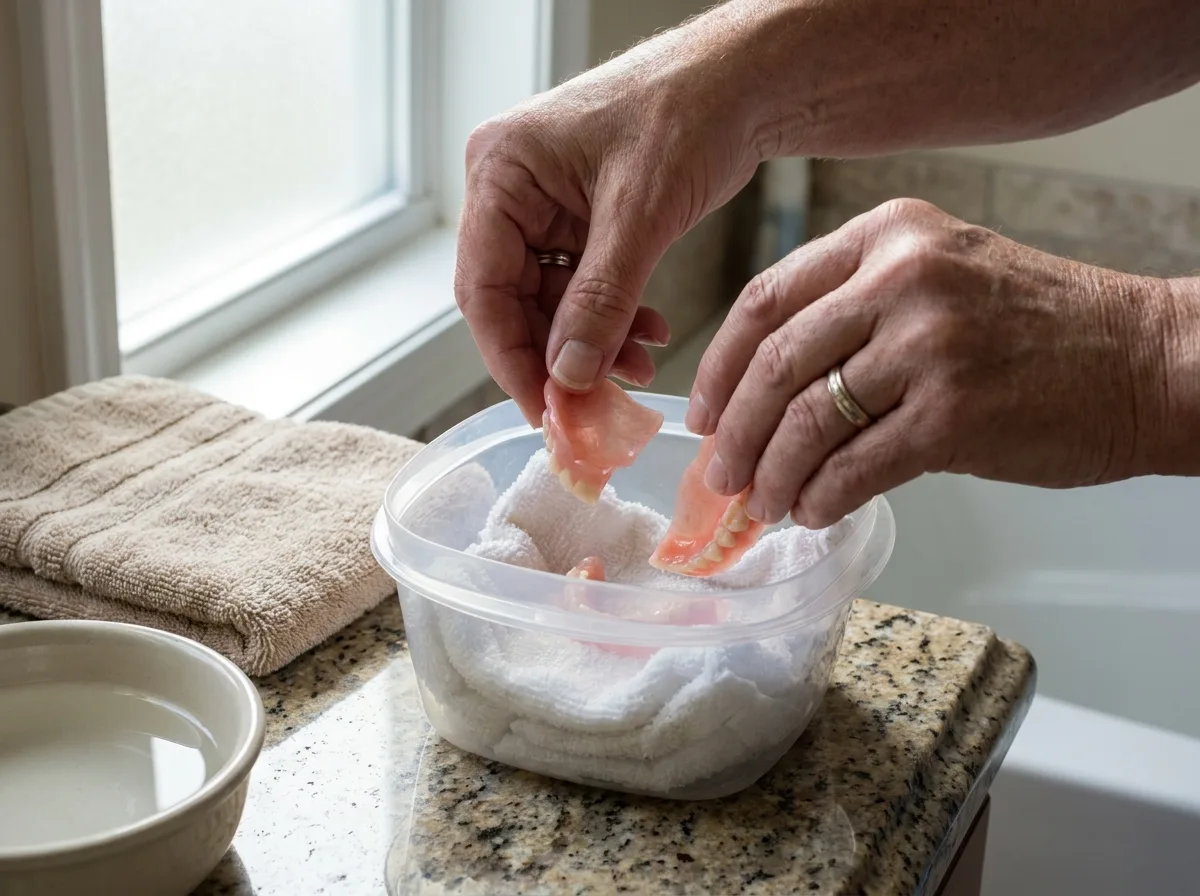
- Stop wearing it. Chewing on a cracked denture can widen the crack, and a sharp edge can cut your gums or tongue.
- Keep every piece. Even tiny fragments and a loose tooth can help the denturist rebuild the original shape accurately.
- Rinse gently and keep it moist. Rinse off food, then store the pieces in a clean container with water or a damp cloth. The CDA notes that dentures kept out of water can dry out or warp, and that hot water should never be used.
- Skip the household glue. More on this below, but ordinary adhesives can damage the material and your mouth.
- Call your provider. Explain what happened and ask how soon they can look at it. Bring all the pieces with you.
- Plan for soft foods and a quiet few days. Without your teeth, choose soft, cool foods and take care with sharp fragments if anything has chipped.
If you need the clinic urgently because of a broken denture, the emergency dentist page lists broken dentures and partials among the problems the clinic treats, and our older walkthrough on dealing with a broken denture emergency covers the basics.
Why household glue is a bad idea
It is easy to assume that if dentures are made of plastic, plastic glue will do. Several things go wrong with that idea.
Chemicals that were never meant for your mouth
Superglue and similar adhesives are not made to sit against gum tissue for hours at a time. Fumes, residue and irritation are all possible, and the glue can seep into tiny pores in the acrylic where it is hard to remove. If you have already used one, tell your provider so they know what they are working with.
A repair that cannot be redone cleanly
A denturist repairs a break by cleaning the surfaces, aligning the pieces, and bonding them with acrylic in a controlled way. Dried glue in the break line can get in the way of that bond, and sometimes the denture has to be remade rather than repaired. A repair that could have been simple becomes a bigger job.
Small misalignments with big effects
Gluing a denture back together by hand can leave it a fraction of a millimetre out of true. You may not see it, but your gums and bite will feel it. A denture that rocks slightly can create sore spots and, over time, contribute to problems like irritation under the denture. Our article on denture stomatitis explains how poor fit and hygiene can affect the tissue under a denture.
Common damage and what usually helps
Every break is different, but the table below shows the general picture. It is a guide for conversation with your provider, not a diagnosis.
| What you notice | What it can mean | A kit may help short term? | What a denturist may do |
|---|---|---|---|
| Hairline crack | Stress in the base from chewing, a drop or uneven fit | Rarely a good idea, because the cause may still be there | Assess the crack and fit, then repair or recommend a new base |
| Denture snapped in two | Impact, fatigue or a base that has become thin | Possibly as a very short stopgap | Realign and bond the pieces in the lab, and check whether the denture is worth keeping |
| Tooth fell out | Loosened bond or wear | Sometimes, for a clean socket and a day or two | Reattach or replace the tooth and match the bite |
| Chipped tooth | Impact or hard foods | Not usually | Smooth, rebuild or replace the tooth |
| Bent or broken clasp on a partial | Fatigue from repeated removal | No, and bending it back can weaken it further | Repair or replace the clasp, then recheck how the partial seats |
| Loose fit with no break | Gums and bone change over time | No, a repair kit does not address fit | Reline, rebase or remake, depending on the denture |
What a professional denture repair involves
In Ontario, the Denturism Act sets out the scope of denturism as including the assessment of arches missing some or all teeth and the design, construction, repair, alteration, ordering and fitting of removable dentures, according to the College of Denturists of Ontario. In plain terms, repairing a removable denture is part of what a denturist does. Dentists can also repair dentures, and they cover other ground such as extractions, gum treatment and medication, which our guide to denturist vs dentist explains in more detail.
Assessment first
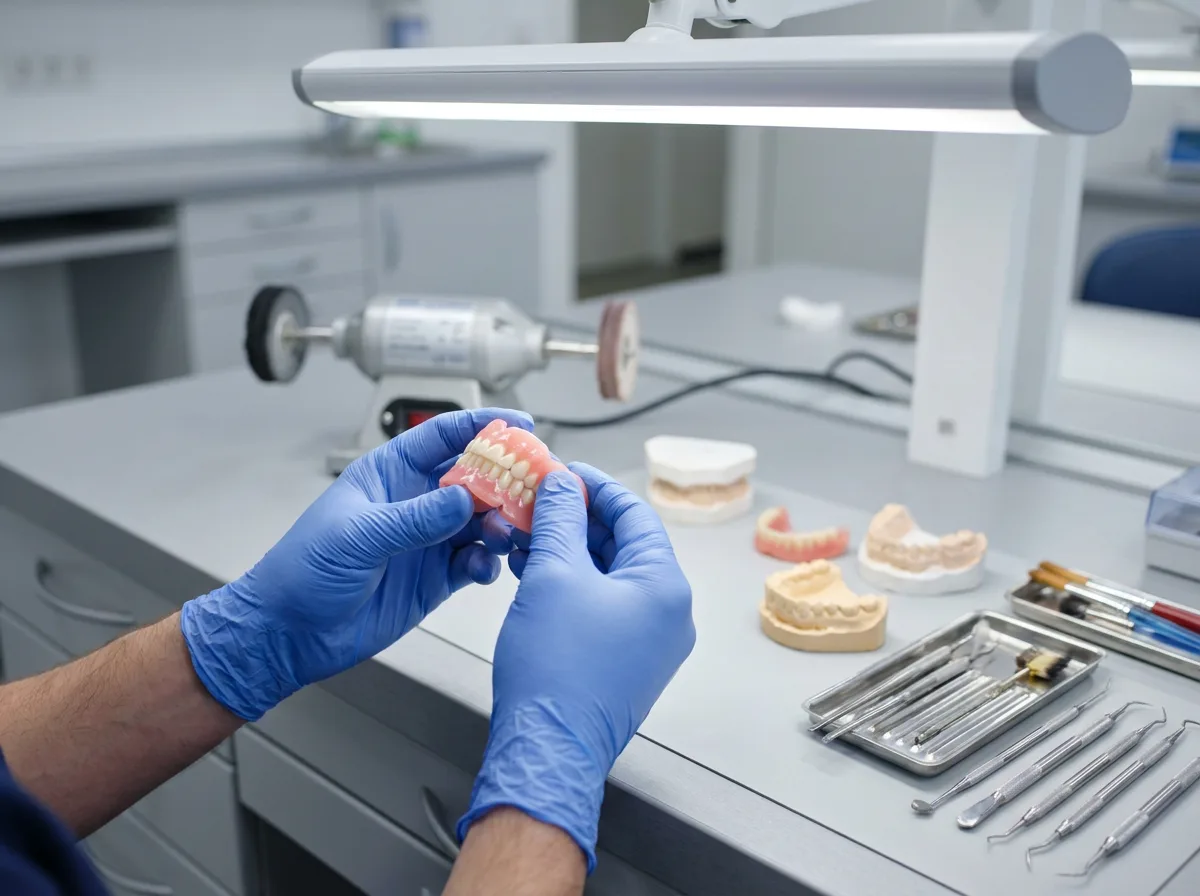
A good repair visit starts with a look at the whole denture, not just the break. The provider checks how the pieces fit together, whether the base has become thin or warped, how the denture sits on your gums and how your bite meets. Sometimes the break is a symptom of a fit problem, and fixing only the crack would leave the cause in place.
The repair itself
Depending on the damage, the pieces are cleaned, aligned and bonded with denture-grade acrylic, a tooth is reattached or replaced, or a clasp is repaired or rebuilt. The Osmin Denture Clinic website describes an on-site denture laboratory and lists denture relines, rebases and repairs among its services, and its denture care page shows how repairs fit alongside the rest of the clinic’s denture work. Whether a particular repair can be done quickly or needs lab time depends on the damage, so ask when you call.
Fit check afterward
After the repair, the denture is checked in your mouth and adjusted where needed. If the repair changed the shape even slightly, a small adjustment can prevent sore spots before they start. If you notice rubbing in the days after, go back and say so rather than waiting it out.
For partials with clasps
Partial dentures hold on with clasps that grip natural teeth. A bent or broken clasp can load the wrong teeth, so these repairs matter more than they look. Our guide to partial dentures explains how they stay in place, and the partial dentures service page describes the clinic’s approach.
Repair, reline, rebase or replacement?
People often search for a repair kit when what they really have is a fit problem. Dentures sit on gums and bone that change over time, so a denture that once felt snug can slowly loosen even without a crack. Here is how the common options compare.
| Option | What it addresses | Who does it | Questions to ask |
|---|---|---|---|
| Home repair kit | A temporary hold on a clean break or loose tooth | You | How long should I expect it to hold, and will it affect a professional repair later? |
| Professional repair | Cracks, breaks, lost or chipped teeth, damaged clasps | Denturist or dentist | Is this denture still worth repairing, or is it near the end of its life? |
| Reline | Fit, when the base no longer matches your gums | Denturist or dentist | Is a hard or soft reline better for my mouth? |
| Rebase | Fit and strength, by replacing the whole base while keeping the teeth | Denturist or dentist | Are my teeth in good enough shape to keep? |
| New denture | Wear, repeated breaks, changed bite or major fit change | Denturist or dentist | What will the process, timeline and cost involve? |
If you are weighing the long game, our article on how long dentures last explains why many sets need relines or repairs along the way and are replaced when wear or fit can no longer be corrected.
Why dentures break in the first place
Understanding the cause helps you avoid a repeat. The usual suspects include drops onto a hard surface, squeezing too hard while cleaning, chewing on very hard or sticky foods, a denture that has become loose and flexes under pressure, and simple age and wear.
Handling and cleaning habits
The CDA says dentures can break if dropped or squeezed too tightly, and recommends standing over a folded towel or a sink of water when you handle them. It is a small habit that prevents many breaks. Our step-by-step guide on how to clean dentures covers the daily routine in detail.
A loose denture is a fragile denture
When a denture no longer fits closely, it can rock under chewing force, and that repeated flexing is a common route to cracks. If yours feels loose, it is worth finding out why before you reach for adhesive or a kit. Our guide on denture adhesive explains what it can and cannot fix, and the one on suction dentures covers a common lower denture complaint.
Regular check-ups
The CDA suggests seeing your dentist regularly and at least once a year, because your mouth is always changing and dentures need adjusting or relining from time to time. A yearly look can catch a hairline crack or a worn clasp before it turns into a break.
Is a repair kit ever reasonable?
It is fair to say yes in a narrow set of cases, and it is better to be upfront about that than to pretend nobody is ever stuck. If you are travelling, it is a weekend, or you cannot get to a provider for a few days, a kit used exactly as the label directs may help you get by. A few ground rules make that safer.
- Read the label for the specific product, and follow the cure time and cleaning instructions.
- Use it only for a clean break where the pieces meet without gaps.
- Do not use any product to reshape the fitting surface of the denture.
- Keep the pieces and packaging details so you can tell your provider what was used.
- Book a professional assessment as soon as you can, even if the repair seems to hold.
If the denture rubs, shifts or feels different after a home fix, stop wearing it and get it looked at. A temporary hold is only worthwhile if it does not cost you a good denture.
Warning signs that need prompt attention
Most denture breaks are inconvenient rather than dangerous, but a few situations deserve faster action.
Contact a provider promptly if you notice
- Sharp edges or fragments that cut your gums, tongue or cheeks.
- Sore spots, redness or ulcers that do not settle after you stop wearing the denture.
- A broken clasp that is loading a natural tooth or making a tooth feel loose.
- A denture that keeps breaking in the same place.
- Pain, bleeding or swelling around the area where a piece broke.
Seek urgent or emergency care for
Call 911 or go to an emergency department if you have trouble breathing or swallowing, if you think a piece of a denture has been swallowed or inhaled and you feel any distress, if you have significant facial swelling with fever, or if bleeding will not stop. This article cannot diagnose the cause of these symptoms, and they should be assessed by a clinician right away.
Cost and coverage questions
The cost of a denture repair depends on the type of damage, how much lab work it needs, whether a tooth must be replaced, and whether the denture needs other work at the same time, so there is no single price that fits every situation. Ask your provider for the figure in writing before work begins, and ask whether anything else is recommended and why. Compare that with what a kit would cost you if it fails and a professional repair becomes more involved.
The Canadian Dental Care Plan
The Government of Canada’s Canadian Dental Care Plan coverage page is the place to check which denture services the plan lists, including repairs, relines and rebases, and whether preauthorization applies. Eligibility, payment amounts and provider participation vary, so confirm the details with the plan and your provider before treatment. Our article on whether the CDCP covers dentures walks through the main questions. The Osmin Denture Clinic website states that the clinic accepts the plan, and its low income dental care page has more on that topic.
Questions that save you money and time
| Question | Why it matters |
|---|---|
| Is this denture worth repairing? | An older or worn denture may keep breaking, and a new one may make more sense |
| Is the break a sign of a fit problem? | If so, a reline or rebase may be needed alongside the repair |
| How long will I be without the denture? | Helps you plan work, meals and appointments |
| Will a repair affect the fit? | A small adjustment afterward is common, so ask how follow-up works |
| Is preauthorization needed for my benefits? | Some plans require approval before certain denture work |
| What can I do to prevent another break? | Handling, cleaning, storage and check-up habits all play a part |
Repairs for seniors, caregivers and long-term care
A broken denture hits some people harder than others. If you are caring for a parent, spouse or resident who wears dentures, a break can affect eating, speaking and confidence very quickly, and getting to a clinic is not always simple.
For family caregivers
Keep an eye out for changes in eating habits, a denture left out more than usual, or complaints of soreness, because these can be early clues. If a denture breaks, follow the same steps listed earlier, keep the pieces together and note what happened so you can explain it to the provider. Our guide to denture care tips for seniors has practical routines that reduce accidents.
When getting out is hard
The clinic’s mobile denture services page says it provides house call service in the home, a long-term care facility, hospital or retirement residence, and lists relines, rebases and repairs among those services. Ask the clinic directly whether your situation qualifies and what the visit would involve.
Eating and speaking while you wait
If your denture is out of action for a day or more, a few practical habits help. Choose soft, cool foods and cut them small. Avoid very hot drinks, which are harder to judge when your mouth feels different. If your dentures usually sit in place for work or social events, tell your provider about the timing so they can plan accordingly. The American Dental Association’s MouthHealthy page notes that if soreness or irritation continues, you should consult your dentist, and the same applies after a repair.
For related reading, adjusting to new dentures explains what normal settling feels like, and our overview of removable dentures shows how repair fits into long-term care.
Booking a denture repair assessment
If your denture is cracked, missing a tooth or just not feeling right, a short visit can tell you whether it can be repaired, whether the fit needs attention, and what your options are. You are welcome to contact the clinic to ask about an appointment, describe what happened, and mention any mobility needs. The clinic’s website lists a no obligation initial denture and dental care consultation, and you can confirm current details when you call. Our about page introduces the team, and the complete dentures page explains the clinic’s approach to full sets.
Bring all the pieces, your benefit information if you have it, and any questions from this guide. Whatever you decide, a denture that fits well and is in good repair is easier to live with than one held together by guesswork.
Frequently asked questions about denture repair kits
Do denture repair kits actually work?
Sometimes, for a short time. A kit may hold a clean break together for a few days so you can get by until your appointment, but the repair is rarely as strong as one done in a lab. Treat it as a temporary stopgap and have the denture examined.
What should I do first if my dentures break in half?
Stop wearing them, keep every piece, rinse gently and store them in a clean container with water or a damp cloth. Avoid household glue and call your provider. Bring all the pieces to the appointment so the repair can match the original shape.
Can broken dentures be repaired?
Often, yes. Cracks, breaks, lost teeth and damaged clasps can frequently be repaired, depending on the damage and the condition of the denture. A provider has to look at it to say whether repair or replacement makes more sense.
Can I use superglue on my dentures?
It is not recommended. Household glues are not made for use in the mouth, can irritate tissue and can make a later professional repair harder. If you have already used one, tell your provider so they know what they are working with.
How long does a home denture repair kit last?
The packaging for most kits describes the repair as temporary, and how long it lasts depends on the break, the product and how you use the denture. Plan to see a professional soon, even if it seems to hold.
Where can you buy a denture repair kit in Canada?
They are sold in many pharmacies and by online retailers. Availability and prices change, so check the product page or ask a pharmacist. Read the label carefully, and do not confuse a repair kit with a reline kit or a tooth replacement product.
Are denture repair kits safe?
Used exactly as directed on a clean break, many people use them as a short-term fix, but safety depends on the product and how it is used. Do not alter the part that touches your gums, stop wearing the denture if it rubs, and speak to your provider.
What is the difference between a repair kit and a reline kit?
A repair kit is meant to join pieces or reattach a tooth. A reline kit is meant to change the fitting surface of the denture. Reline products can create pressure points and hide fit problems, so a professional reline is usually the safer route.
Can a denturist repair broken dentures in Ontario?
Yes. The College of Denturists of Ontario describes the scope of denturism as including the repair, alteration and fitting of removable dentures. Dentists can also repair dentures, and some situations call for both professionals.
How much does it cost to repair dentures?
The cost depends on the damage, the lab work involved and whether other work is needed, so there is no single figure. Ask for a written estimate before treatment and check whether your benefits require preauthorization.
Does the Canadian Dental Care Plan cover denture repairs?
The plan’s coverage page is the place to check which denture services are listed, including repairs, relines and rebases. Eligibility, payment amounts and provider participation vary, so confirm with the plan and your provider before treatment.
Can you wear dentures with a crack?
It is best not to. Chewing can widen the crack or cause a break, and sharp edges can injure your mouth. Stop wearing a cracked denture and arrange an assessment, especially if it is uncomfortable.
What if a tooth falls out of my denture?
Keep the tooth, stop using the denture if it feels uneven, and contact your provider. A tooth can often be reattached or replaced, and a clean fit with the right bite is easier to achieve in the lab than at home.
Why does my denture keep breaking?
Common reasons include drops, squeezing during cleaning, very hard foods, a loose fit that makes the denture flex, and normal wear. If it keeps breaking in the same place, ask your provider to check the fit, bite and the age of the denture.
Do I need a reline instead of a repair?
If the denture is loose but not broken, a reline or rebase is usually what addresses fit, because a repair kit does not change how the denture sits on your gums. Your provider can tell you which one applies.
Can a mobile denturist repair dentures at home?
The clinic’s mobile services page lists repairs among its mobile denture services for homes, long-term care and hospitals. Ask the clinic whether your situation qualifies, as availability and scope depend on the visit.
How can I stop my dentures from breaking?
Handle them over a folded towel or a sink of water, clean them gently without squeezing, avoid very hard or sticky foods, store them in water, and book a check-up at least once a year so cracks and worn clasps are caught early.
When is it time to replace dentures instead of repairing them?
When a denture breaks repeatedly, has worn teeth, no longer fits even after relining, or no longer matches how you bite, replacement may make more sense. Your provider can explain which situation applies after examining it.
Leave a Reply
You must be logged in to post a comment.