

Denture Reline Guide: Cost, Hard vs. Soft Options, and When Yours Is Due (2026)
A denture that fit well last year can feel different today. Food slips underneath it, one spot on the gum starts to rub, and the tube of adhesive empties faster than it used to. Often the denture itself is fine. The mouth underneath it has changed, and a reline is the usual way to bring the two back together.
A denture reline resurfaces the side of your denture that rests on your gums so it matches the shape of your mouth as it is now. This guide explains what a reline is, how hard, soft and temporary relines differ, how a reline compares with a rebase, a repair or a new denture, the signs it may be time, what happens at an appointment, what a reline typically costs in Ontario, and how insurance and the Canadian Dental Care Plan (CDCP) apply. It also covers a few points for seniors and caregivers, including mobile denture visits.
Quick answer on cost: in Ontario, a soft reline typically costs about $200 to $400 per denture and a hard reline about $400 to $700, before insurance or the CDCP. The cost section below explains what changes the price and what coverage may pay.
Everything here is general education, not a diagnosis or personal dental advice. Whether you need a reline, which type suits you and when to have it done depends on your gums, your denture and your health, so it takes an in-person assessment by a licensed denturist or dentist. Use this page to get ready for that conversation.
What is a denture reline?
A denture reline is a procedure that refreshes the inner surface of a denture, the part that touches your gums, so the denture fits the current shape of your mouth. The teeth and the outer shape stay the same. A reline can be done on complete dentures and on partial dentures.
Think of a denture as having three working parts: the artificial teeth you see, the pink base that holds them, and the surface of that base that rests on your gums. Only the last one touches living tissue, so it is the surface that decides whether the denture feels stable or sore. Over time that surface stops matching the ridge it sits on, and a reline rebuilds the match. If you want the full picture of how the clinic approaches this service, the denture reline page is a good companion to this article.
What a reline changes
A reline adds or replaces material on the gum side of the denture, usually after a fresh impression of your mouth has been taken with the denture itself as the tray. The goal is better contact between denture and tissue, which tends to improve stability, spread chewing pressure more evenly and reduce rubbing.
What a reline does not change
A reline does not replace worn teeth, repair a cracked base or fix a bite that has drifted out of balance. Sometimes a denturist will check and adjust the bite at the same visit, but those are separate jobs. If the problem is damage rather than fit, a repair is a different conversation, and our guide to dealing with a broken denture covers what to do first.
Why dentures stop fitting the way they used to
Gums and the jawbone beneath them are living tissue, and they change. The Canadian Dental Association notes that your mouth is always changing, so dentures will need adjusting or relining from time to time to make sure they fit well. An acrylic denture does not change with you, which is why a gap can open up between the two.
The first months after teeth are removed
Healing is the biggest change most people go through. The same CDA page explains that with immediate dentures, the healing period can take up to six months, and that during this time the bones and gums can shrink and the dentures may need to be relined for a proper fit. If you are planning extractions, our guide to immediate dentures in Toronto walks through what to expect before, during and after.
Years later
Even after the early healing, the ridge under a denture can keep changing slowly. Weight changes, health conditions, medications that dry the mouth and everyday wear can all affect how a denture feels, though the effect differs a lot from one person to the next. Nobody can predict your pace from a chart, which is why a regular fit check is more useful than counting years.
Why fit matters beyond comfort
A loose denture rocks, and rocking rubs. The CDA also points out that poorly fitted dentures may cause denture sores that can make oral cancer more difficult to spot, which is one reason regular dental exams matter even for people with no natural teeth. A persistent red, sore area under a denture is also worth having looked at, and our article on denture stomatitis explains how fit and hygiene can be connected to irritation on the roof of the mouth.
Hard, soft and temporary relines
Relines are usually described by the material used and how long it is meant to last. Clinics do not all use the same names or methods, so treat the table below as a general map and ask your own provider what they recommend and why.
| Type | What it is | Often considered when | Worth asking |
|---|---|---|---|
| Hard reline | A new layer of hard denture acrylic that matches the base material | The gums have settled and the denture needs a firmer, longer-lasting fit | Is it done in the lab or chairside, and will I be without the denture? |
| Soft reline | A cushioned liner on the gum side of the denture | Tissue is thin or tender and a hard base feels harsh | How do I clean it, and how often should it be checked? |
| Temporary reline (tissue conditioner) | A soft, short-term material that lets irritated tissue settle | Gums are inflamed or still healing and a final reline would be premature | How long will it stay in, and what happens next? |
Hard relines
A hard reline replaces the worn fitting surface with fresh acrylic that is shaped to your current ridges. Because the material matches the original base, many people think of it as the standard option once the tissue has stabilized. Depending on the method, a hard reline may be processed in a laboratory, which is one reason it helps to ask how a clinic handles the timing. The clinic describes an in-house dental laboratory on its website, so ask the team how that affects the steps for your own denture.
Soft relines
A soft liner adds cushioning for people whose gums are tender or thin. It can feel noticeably gentler, but soft materials are handled differently from hard acrylic. They can change over time and may need more attention when you clean them, so ask for cleaning instructions specific to the product your provider uses before you leave.
Temporary relines and tissue conditioners
When tissue is inflamed or still healing, a provider may use a temporary soft material to give the gums a break while they recover. This is a short-term step, and it usually comes with a follow-up plan. If irritation has been going on for a while, you may also find our article on common denture problems and solutions helpful.
Reline, rebase, repair or remake?
These four words get used interchangeably, but they describe different jobs. The right one depends on what is wrong with the denture, and sometimes more than one applies. A rebase generally replaces the whole pink base while keeping the teeth, which makes it a bigger step than a reline.
| Option | What changes | What stays | Usually points to |
|---|---|---|---|
| Reline | The gum-side surface of the denture | Teeth, base and overall shape | A denture in good shape that has become loose or sore |
| Rebase | The whole acrylic base | The existing teeth | Teeth in good condition on a base that has aged or worn |
| Repair | A crack, a lost tooth or a broken clasp | The rest of the denture | Damage rather than a change in fit |
| Remake (new denture) | Everything | Nothing | Worn teeth, repeated breakage, a bite that no longer works, or a fit that cannot be corrected |
If you are weighing whether to keep going with what you have, our guide on how long dentures last covers lifespan by type and the signs that replacement is on the table.
Signs your denture may need a reline
Most people do not notice a single dramatic change. It is more often a slow slide from fine, to a little loose, to “I keep adjusting it.” These signs are worth mentioning to your provider, though none of them proves a reline is the answer on its own.
| What you notice | What it can mean | A reasonable next step |
|---|---|---|
| The denture rocks or shifts when you chew | Space has opened between the denture and the gum | Book a fit assessment |
| Food collects underneath | The seal along the edges is no longer tight | Mention it at your next visit or sooner |
| A sore spot keeps returning | Uneven pressure on one area | Stop picking at it and have it looked at |
| You need much more adhesive than before | The fit has changed and adhesive is covering the gap | Have the fit checked rather than adding more |
| Clicking or slipping when you talk | The denture is not staying put during movement | Ask whether a reline or adjustment is needed |
| The denture feels tight in one place and loose in another | The ridge has changed unevenly | Assessment, since a simple adjustment may not be enough |
What heavy adhesive use can tell you
Adhesive can help a well-fitting denture feel more secure, but it is not designed to cover for a poor fit. If you find yourself using more each month, treat that as information. Our guide to denture adhesive explains what it can and cannot fix and how much is too much.
Speaking and eating
Many people notice a fit change first at the table or on the phone. If you have a lower denture that never seems to stay put, ask whether the shape of your ridge is part of the story, and have a look at the article on suction dentures to understand what options exist for a loose lower.
How often should dentures be relined?
There is no single schedule that suits everyone. Many providers suggest a fit check at least once a year and a reline when the denture no longer fits well, which can be sooner after extractions or after a change in health or weight, and later for a stable mouth.
The Canadian Dental Association recommends seeing your dentist regularly and at least once a year, because your mouth keeps changing. The clinic’s own reline page also encourages regular relines at least once a year. You will see ranges of a year or two quoted around the internet, but those are rules of thumb rather than medical guidance. The better question is how the denture feels and how the tissue looks today, which is what an assessment answers.

Questions that help you decide when
It can help to jot down a few notes before a visit. When did the denture last feel secure? Has anything changed in your health, weight or medications? Are you eating differently to protect a sore spot? Those details help your provider choose between watching, adjusting, relining or something larger. The guide to adjusting to new dentures also lists what is normal in the early weeks, which is useful for telling routine settling from a fit problem.
What happens at a denture reline appointment
Details vary by clinic and by the type of reline, so use this as an outline rather than a script. It is the sequence many denture wearers can expect to hear about.
| Stage | What usually happens | What you can do |
|---|---|---|
| 1. Assessment | The provider looks at your gums, the denture, the bite and how the denture moves | Describe sore spots and mention adhesive use |
| 2. Impression | A soft impression material is placed in the denture, and you gently bite and move your lips and cheeks | Stay relaxed and follow the prompts |
| 3. Lab or chairside work | The gum-side surface is renewed with the chosen material | Ask whether you will be without the denture and for how long |
| 4. Fitting | The denture is tried in, trimmed and polished, and the bite is checked | Say so right away if anything pinches |
| 5. Follow-up | A short visit or call to check comfort and make small changes | Note where it still rubs, and when |
The assessment
Before anything is added to the denture, a provider needs to know whether a reline is the right step. They will look at the tissue for irritation or signs of infection, check the denture for cracks or worn teeth, and watch how it behaves when you speak and bite. If something outside the scope of denture care shows up, such as a sore that does not heal, the right next step is a dentist or physician.
The impression and the lab
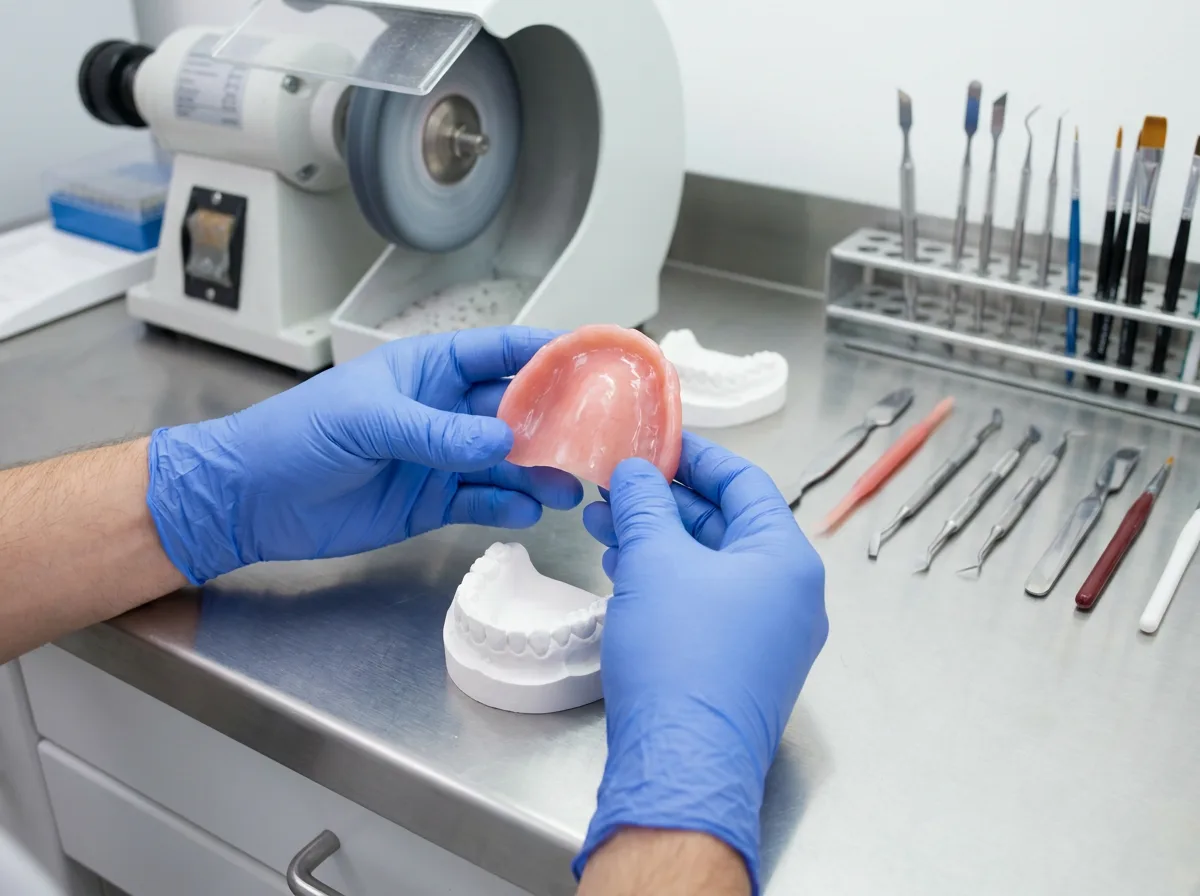
A reline impression is taken with your existing denture, which carries the shape of your gums as they are today. In a clinic with an on-site laboratory, that work can be handled close to the chair, and the team can explain how that affects timing for your visit. Be wary of any promise of a specific turnaround before the provider has seen the denture, since the method and the state of the denture both matter.
The fitting and follow-up
At the fitting, the provider checks the edges, the seal, the bite and your comfort. Small changes are normal at this stage. Ask when to come back if a spot still rubs after a day or two of wear, and avoid trying to file or trim the denture yourself.
What to expect after a reline
Many people feel the difference as soon as the denture goes in, with less shifting and fewer gaps. The tissue and your muscles may also need a short period to settle into the improved fit, in the same way new shoes need breaking in. Plan on softer foods for a day or two if you are tender, and keep your follow-up visit.
Cleaning a relined denture
Ask your provider how to clean the specific material used. In general, the Ontario Dental Association advises cleaning dentures with liquid hand soap and a denture brush, then rinsing well with water, and it notes that your gums and bones can change with time but your dentist can make adjustments so dentures still fit. You can read the full guidance on the ODA denture care page. For a step-by-step routine, see our guide to how to clean dentures.
Overnight and storage questions
Whether to wear a relined denture overnight is a question for your provider, since it depends on your tissue and the material. If you want the research behind the usual advice, read should you sleep with dentures in before your visit.
Reline kits and do-it-yourself fixes
Over-the-counter reline products are sold in pharmacies and online, and it is easy to see why they are tempting. The concern is that a layer applied at home can end up uneven, can create new pressure points and can hide a fit problem that a professional would want to see. A thick layer in the wrong place may also change your bite without you noticing right away. If you have already used one, tell your provider so they know what is on the denture. Our article on denture repair kits goes into home products in more detail, including why household glue is a poor idea.
When a reline is not enough
A reline fixes fit. It cannot rescue every denture. If the teeth are badly worn, the base is cracked in several places, the bite has changed or the ridge has resorbed so far that a conventional denture cannot hold steady, your provider may talk about a rebase, a new denture or a different approach altogether.
Replacement
A new denture is a bigger project, but it can make sense when the existing one has done its job. If that is where the conversation lands, the complete dentures page explains the clinic’s process for full sets, and the overview of removable dentures covers the types and daily care.
Implant-supported options
Some people who struggle with a loose denture ask about anchoring it to dental implants. That is a surgical decision with its own candidacy questions, and it is not right for everyone. The comparison in dental implants vs dentures and the clinic’s implant-supported dentures page are good places to start, and your provider can tell you whether it is worth exploring in your case.
Relines for partial dentures
A partial denture sits partly on gum tissue and partly on natural teeth through clasps or rests. If the gum-side surface no longer matches, the partial can shift and put extra load on those teeth. Your provider will want to check the clasps and how the framework seats as well as the base, so a partial reline is rarely just about the gum side. Our partial dentures guide explains how they stay in place and what to expect day to day.
Who can reline a denture in Ontario?
In Ontario, both dentists and denturists work with dentures. The College of Denturists of Ontario describes the scope of the profession as including relines, rebases and repairs of removable dentures, along with the design and fabrication of complete, partial, immediate and implant-supported dentures. The CDA notes that immediate dentures may need to be relined by a dentist during the healing period. Which professional you see often comes down to the rest of your oral health.
If your concern goes beyond the denture itself, for example a sore that does not heal, swelling or a tooth problem, a dentist or physician is the right person to see. Our comparison of denturist vs dentist explains how the two roles differ and when you might need both.
How much does a denture reline cost?
Reline fees in Ontario are usually quoted per denture, so relining both an upper and a lower denture costs roughly twice as much as relining one. The type of reline matters most. Published 2026 Ontario price guides and Ontario denture clinics give these typical ranges:
| Reline type | Typical Ontario fee (per denture) | Notes |
|---|---|---|
| Soft reline | About $200 to $400 | Cushions tender or thin gums; usually needs redoing sooner than a hard reline |
| Hard reline (chairside or lab-processed) | About $400 to $700 | More durable; a lab-processed reline usually costs more and takes longer than a chairside one |
| Temporary reline or tissue conditioner | Usually less than a permanent reline; quoted on assessment | Short term, often used after extractions while the gums heal |
| Partial denture reline | Quoted on assessment | Often priced like a complete-denture reline, sometimes higher depending on the framework |
These are typical Ontario fees, not Osmin’s fee schedule. Ontario has no mandatory fee schedule, so prices vary between providers. Many relines are finished the same day or within a couple of days. The clinic gives a written estimate after assessing your denture.
What changes the price of a reline
Material. A soft reline can cost less per visit, but it usually wears out sooner, so it is worth comparing the cost over a couple of years rather than a single visit. A hard reline costs more up front and generally lasts longer.
Chairside or lab-processed. A chairside reline is done in the mouth during your appointment. A lab-processed reline uses an impression taken inside your denture, and the new base is processed in a lab. Lab processing is usually more precise and durable, but it costs more and means being without the denture for a time.
Other work at the same visit. Repairs, replacement teeth or bite adjustments are usually listed separately. If the base itself is in poor condition, a rebase or a new denture may be recommended instead, as described earlier in this guide.
Does private insurance cover relines?
Many private dental plans cover relines under their denture or major-service coverage, often with a frequency limit, such as one reline every few years per denture. Plans also commonly exclude relines in the first few months after a new denture, because early adjustments are expected to be part of the denture fee. If you are unsure, ask the clinic to send a predetermination to your insurer.
Questions to ask about cost
Treat any online figure as a starting point. These questions help you understand a written estimate for your own denture:
| Question to ask | Why it matters |
|---|---|
| Which type of reline are you recommending, and why? | Hard, soft and temporary options differ in material and follow-up |
| What does the estimate include? | Adjustments, follow-up visits and any lab work may or may not be bundled |
| Do I need preauthorization from my plan? | Some benefit plans want approval before certain work starts |
| Will I be without my denture, and for how long? | It helps you plan meals, work and appointments |
| What should I do if it still rubs afterward? | You should know whom to call and when to come back |
The Canadian Dental Care Plan
The federal plan’s coverage page lists denture repairs, relines and rebases among the removable prosthodontic services it covers, along with placing lining in dentures to condition oral tissues for comfort and healing. You can read the details on the Government of Canada CDCP coverage page. Whether you qualify, how much the plan pays and whether your provider participates are separate questions, so confirm each of them before treatment. At an adjusted family net income under $70,000 you may have no co-pay, your share rises in the $70,000 to $90,000 tiers, and you may owe the difference if the clinic’s fee is higher than the plan’s established fee. Our articles on CDCP and dentures and CDCP for seniors walk through the eligibility and application steps. The clinic’s denture care page also says it accepts the plan, so you can ask the team how it handles claims.
Relines for seniors, caregivers and long-term care
Fit problems often show up quietly in older adults, especially when someone is eating less, avoiding certain foods or has trouble describing discomfort. A relative or care worker may be the first to notice a denture that is always being taken out, a person who refuses meals or a red area along the gum line.
For family caregivers
It can help to watch for changes in eating, repeated adjusting of the denture, bad breath, drooling or a sore spot that keeps coming back. If the person wears the denture all day, check the gums gently at cleaning time and mention anything unusual to the provider. Avoid trying to fix the fit at home.
When getting out is hard
The clinic’s mobile services page lists denture relines, rebase and repairs among the services offered for patients at home, in long-term care, in hospital or in a retirement residence. Availability and what can be done at a visit depend on the situation, so call and describe the need. The post on why you might try mobile denture services explains how those visits work in plain terms, and the clinic’s contact page notes that its office is wheelchair accessible.
Warning signs that need prompt attention
Contact a provider promptly if you notice
A sore spot that does not settle within a few days after the denture is out, a patch that looks white or unusually red, a denture that has cracked, or a fit that has suddenly changed. Stop wearing a denture that is cutting into your gums until it has been looked at.
Seek urgent or emergency care for
Facial swelling with a fever, bleeding that will not stop, trouble swallowing or breathing, or any significant injury to the face or mouth. In those situations do not wait for a denture appointment. Go to an emergency department or call 911 if breathing is affected, and see the clinic’s emergency dentist page for dental emergencies that are not life-threatening.
Booking a denture reline assessment
If your denture is loose, sore or just not what it used to be, a short visit can tell you whether a reline is the right step, which type is worth considering and what else might need attention. You are welcome to contact the clinic to ask about an appointment and to mention any mobility needs. The clinic’s website lists a no obligation initial denture and dental care consultation, and you can confirm current details when you call. If you are new to the clinic, our guide to what to expect at your first denture appointment explains how the first visit usually goes.
Bring your denture, your benefit information if you have it and any questions from this guide. Whatever you decide, a denture that fits the mouth you have now is easier to live with than one you keep working around.
Frequently asked questions about denture relines
What is a denture reline?
A denture reline refreshes the gum-side surface of a denture so it matches the current shape of your mouth. The teeth and outer shape stay the same. It is a common way to fix a denture that has become loose or sore because the gums have changed.
How do I know if my dentures need a reline?
Common signs include a denture that rocks or slips, food collecting underneath, sore spots that keep returning and needing more adhesive than before. Those signs can have other causes too, so a provider needs to examine the denture and your gums to say whether a reline is the answer.
How often do dentures need to be relined?
There is no fixed schedule. Many providers suggest a fit check at least once a year and a reline when the fit is no longer good. It may be sooner after extractions or a change in health or weight, and later if your mouth has stayed stable.
Is a denture reline painful?
Most people describe a reline as uncomfortable at worst, since it involves impression material and fitting rather than surgery. Tender gums can make the impression step feel sensitive. Tell your provider if anything hurts so they can adjust their approach or pause.
How long does a denture reline take?
It depends on the type of reline, the method and the clinic. Some are completed during a visit and others involve laboratory time. Ask your provider whether you will be without the denture and for how long before you agree to treatment.
What is the difference between a hard reline and a soft reline?
A hard reline uses firm acrylic that matches the denture base. A soft reline uses a cushioned liner that can feel gentler on tender gums but is handled differently and may need more attention. Your provider can explain which suits your tissue and your denture.
What is the difference between a reline and a rebase?
A reline refreshes the gum-side surface. A rebase generally replaces the whole acrylic base while keeping the existing teeth. A rebase is a bigger step and is usually considered when the base has aged or worn but the teeth are still in good shape.
Can I reline my dentures myself at home?
Home reline products exist, but they can create uneven pressure and hide fit problems a professional should see. A professional reline starts with an assessment and a proper impression. If you have already used a home product, let your provider know before the appointment.
Can a partial denture be relined?
Yes. Partial dentures can be relined, although the provider will also check the clasps, the framework and how the partial seats against your natural teeth. A partial reline is rarely only about the gum side of the denture.
How much does a denture reline cost in Toronto?
Typical Ontario fees are about $200 to $400 per denture for a soft reline and about $400 to $700 for a hard reline, before insurance or the CDCP. Temporary and partial-denture relines are quoted after an assessment. Ask for a written estimate for your own denture.
Is a soft reline cheaper than a hard reline?
A soft reline usually costs less per visit, but it needs replacing sooner. Over a couple of years, a hard reline is often the better value unless your gums need the cushioning a soft liner gives.
Does private dental insurance cover relines?
Many plans do, usually with a frequency limit and an exclusion for the first few months after a new denture. Check your plan or ask the clinic to request a predetermination.
Does the Canadian Dental Care Plan cover denture relines?
The plan’s coverage page lists denture repairs, relines and rebases among its covered services. Eligibility, payment amounts and whether a provider participates vary, so confirm with the plan and your provider before treatment.
Do immediate dentures need a reline?
Often, yes. The Canadian Dental Association explains that during the healing period after extractions, which can take up to six months, bones and gums can shrink and immediate dentures may need to be relined to keep a proper fit.
Can a denturist reline dentures in Ontario?
Yes. The College of Denturists of Ontario describes relines, rebases and repairs of removable dentures as part of the profession’s responsibilities. Dentists also work with dentures, and some situations call for both professionals.
Can I wear my dentures to a reline appointment?
Yes, and you should bring them. The existing denture is usually what carries the impression of your gums, so the provider needs it. Leave adhesive off if you can, and mention any home products you have used.
What if my denture still feels loose after a reline?
Tell your provider, because small adjustments after a reline are common and a follow-up visit exists for that reason. If the denture is still unstable, ask whether the ridge, the bite or the age of the denture is part of the problem.
Can a reline help with sore spots?
Sometimes. Sore spots often come from uneven pressure, and a reline can spread pressure more evenly. A sore that does not heal, or one with a white or unusually red patch, should be checked by a dentist or physician.
Can dentures be relined at home or in long-term care?
The clinic’s mobile services page lists denture relines, rebase and repairs for patients at home, in long-term care, in hospital or in a retirement residence. Ask the clinic whether your situation qualifies, since what can be done depends on the visit.
When should I replace my denture instead of relining it?
Replacement may make more sense when teeth are worn, the base keeps cracking, the bite has changed or the fit cannot be corrected. A provider can tell you which situation applies after examining the denture and your gums.
Leave a Reply
You must be logged in to post a comment.