
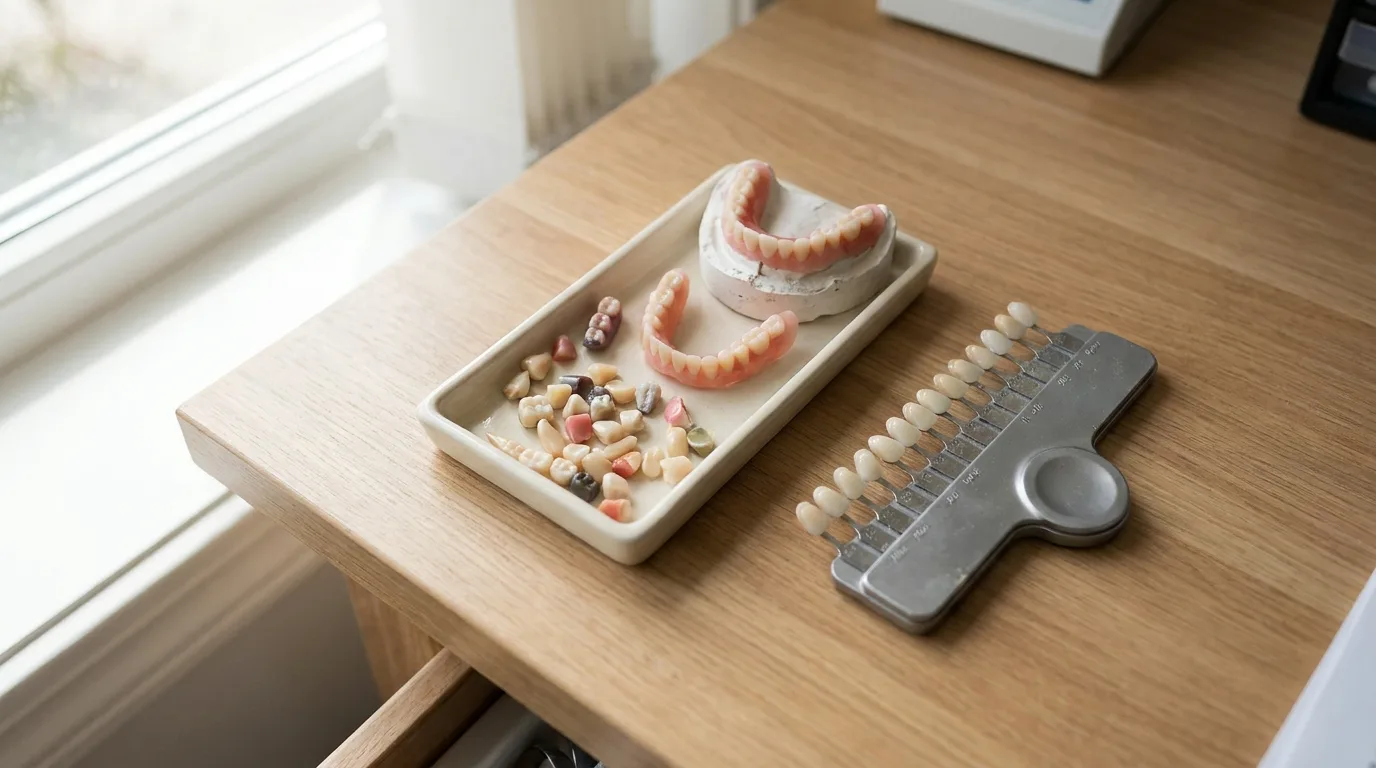
Denture Teeth Types: Acrylic, Porcelain, and Composite Compared, and How to Choose
Most people choosing dentures spend their energy on fit and price, and then somebody hands them a shade card and asks which teeth they like. The material the teeth are made from often gets one quick sentence, if that. It deserves more. The teeth are the part of a denture you see in the mirror, chew with all day and, years from now, may need repaired or replaced.
This guide explains the main denture teeth types, which are acrylic resin, composite resin and porcelain. It covers how each one looks, feels and sounds, how they wear, what happens when a tooth chips, and how shade and shape are chosen. There is also a table of questions to bring to your appointment, advice for partial and implant-supported dentures, and a section for caregivers.
This is general education, not a diagnosis or personal dental advice. The right teeth for you depend on your bite, your gums, the teeth you still have, the type of denture and your own preferences, so ask your denturist or dentist about your situation.
What are the types of denture teeth?
Denture teeth are usually made from acrylic resin, composite (hybrid) resin or porcelain. Acrylic is lighter and easier to adjust, porcelain is harder and wears more slowly in lab testing, and composite sits between them. Each has trade-offs in look, noise, wear and repair, so the best choice depends on the person.
Researchers who compare these materials usually group them the same way. A 2024 laboratory study in the journal Bioinformation tested acrylic resins, composite resins and ceramic materials used in removable dentures, using 88 samples and simulated chewing cycles. It found that the ceramic samples showed better wear resistance than the acrylic and composite resins. You can read the abstract of that wear resistance study of removable denture materials. It was a lab test and not a trial in patients’ mouths, so it tells you how materials behave under a machine, not how your denture will behave over ten years of meals.
That caveat matters. Wear is only one question among several, and a harder tooth is not automatically a better tooth for every mouth. Our guide on removable dentures and how to choose covers the wider decision, and this article zooms in on the teeth themselves.
Denture teeth types at a glance
The table below is a general summary. Individual products differ between manufacturers, so treat it as a starting point for a conversation rather than a ranking.
| Feature | Acrylic resin | Composite resin | Porcelain |
|---|---|---|---|
| Weight | Light | Light to moderate | Heavier |
| Wear in lab testing | Wears faster than ceramic | Wears faster than ceramic | Showed the best wear resistance |
| Chewing sound | Generally quieter | Generally quieter | Can click |
| Chip behaviour | More forgiving of knocks | More forgiving of knocks | More brittle if dropped or struck |
| How it attaches to the base | Generally bonds to acrylic base | Generally bonds to acrylic base | Held mechanically in the base |
| Adjusting and repair | Usually easier to reshape and replace | Usually easier to reshape and replace | Harder to reshape |
| Opposing natural teeth | Gentler contact | Gentler contact | Can be harder on natural teeth that bite against it |
Acrylic resin denture teeth
Acrylic is the most familiar denture tooth material, and many removable dentures use it. The teeth are shaped from a plastic resin that is chemically compatible with the acrylic base, which is generally why they bond to it so well. For many wearers, the practical advantages are weight, a quieter bite and easier adjustment.
Where acrylic tends to work well
Because acrylic is softer, a denturist can usually reshape a tooth surface when the bite needs fine-tuning, and a worn or chipped tooth can often be replaced during a repair. That flexibility is useful in the first months of wear, when your gums and bite are still settling. It also helps when a denture is being relined. Our article on adjusting to new dentures describes why small bite changes are normal early on.
Acrylic is also generally kinder to natural teeth that bite against it, which is a real consideration for someone with a partial denture or an upper denture opposing a few remaining lower teeth.
Where acrylic gives way
The main drawback is wear. Lab testing, including the study above, finds acrylic and composite resins wear faster than ceramic. In daily life that can mean flattened biting surfaces after some years, a less defined smile, or a bite that has changed enough to need attention. Surface staining can also build up over time, depending on diet and cleaning habits. How quickly any of this happens varies a lot between people. It depends on how you chew, whether you clench or grind, what you eat and how the denture is cared for.
If you are curious about overall lifespan, our guide on how long dentures last looks at the factors that matter beyond the teeth.
Composite and hybrid resin denture teeth
Composite denture teeth are made from a resin that contains reinforcing particles. Manufacturers market them under different names, and the exact formulas are proprietary, so their performance depends on the specific product. In general they are positioned between standard acrylic and porcelain, aiming for a more wear-resistant surface while staying lighter and easier to work with than porcelain.
In the Bioinformation study, the composite resins did not match ceramic for wear resistance in that test. That does not make composite a poor option. It means the choice is a trade-off, and your denturist can tell you which products they use and whether a harder-wearing resin tooth is a sensible fit for your bite.
Ask which brand and material a clinic uses, and why. A clear answer is a good sign, and you are entitled to it before you agree to a plan. If you would like to discuss what the clinic’s on-site laboratory can do, you can call 647-294-3310 or use the contact page.
Porcelain denture teeth
Porcelain teeth are fired ceramic. They are dense and hard, and they hold their shape and surface for a long time compared with resin teeth. That is the reason people who chew firmly or who are rough on their dentures sometimes ask about them.
What porcelain does well
The main strength is wear resistance, which was the clear finding in the lab study mentioned earlier. A porcelain tooth is less likely to flatten over the years, so the bite height and the look of the smile can stay more stable in some cases.
What to weigh before choosing it
Porcelain is heavier, which some wearers notice more in an upper denture. It can make a clicking sound when the teeth meet, because it is hard on hard. It is also more brittle, so a dropped denture or a knock on the sink can chip a tooth in a way that a resin tooth might survive. Because porcelain teeth are held mechanically in the base and cannot be reshaped as easily, bite adjustments can be more limited.
The other big question is what the porcelain bites against. If you have natural teeth in the opposite jaw, a harder material can be tougher on them. For that reason, a denturist will often think carefully about porcelain before using it against natural teeth, and many would favour a resin there. Your own clinician will know your bite best.
Which denture teeth are best?
No material is best for everyone. Acrylic and composite are lighter, quieter and easier to adjust. Porcelain wears more slowly but is heavier, more brittle and harder on natural teeth that bite against it. The right choice depends on your bite, your remaining teeth, your denture type and your budget.
It helps to treat the decision as a set of questions about your own mouth rather than a contest between materials. The table below turns those questions into plain language.
| If this describes you | Worth discussing |
|---|---|
| You have natural teeth opposite your denture | A resin tooth may be gentler on them, so ask about contact and wear |
| You clench, grind or chew very firmly | Wear resistance matters more, so ask about harder-wearing options and a night guard |
| Your gums and bite are still healing or changing | Ease of adjustment may matter more than long-term wear |
| Weight bothers you in an upper denture | A lighter resin tooth may feel better |
| The click of hard teeth would annoy you | Ask about how each material sounds in the mouth |
| You live with arthritis or limited dexterity and drop things | Ask which material forgives knocks and how repairs are handled |
| You want the most natural look in your age and face | Shade, shape and arrangement often matter more than material |
If you grind your teeth, our article on night guards for teeth grinding explains how a guard fits into the picture.
How the look of denture teeth is chosen
Material is only one piece of what you see in the mirror. A natural-looking smile comes from the colour, the shape, the size and the way the teeth are arranged against your lips and face. That process is a conversation, and it deserves unhurried time.
Shade
Shade is chosen from a guide of tooth colours, usually held up beside your face in natural light. Natural teeth tend to darken slightly with age, and some people prefer a shade that suits their skin and eyes over the whitest option on the card. It is fine to ask for something brighter or softer. Bring a photo of your own smile from before you lost your teeth if you have one, since it can help your denturist see what felt like you.
Shape and size
Tooth shape and size help the smile look like it belongs on your face. Your denturist considers the width of your face, your lip line and how much of the teeth show when you speak and smile. The arrangement matters too. A slight overlap or a small irregularity can look more natural than perfectly even teeth, and many people find that more comfortable than a very uniform look.
Try-in stage
Many denture processes include a try-in, where the teeth are set in wax so you can see and approve the look and the bite before the denture is finished. The College of Denturists of Ontario describes the denturist’s process as including a try-in alongside impressions and bite assessment, and it lists the profession’s scope as the assessment of arches missing some or all teeth and the design, construction, repair, alteration, ordering and fitting of removable dentures. You can read that on the College of Denturists of Ontario scope of practice page. The try-in is your chance to say what you like and what you would change. Our guide to the first denture appointment in Toronto walks through what usually happens in the early visits.

Denture teeth for different types of dentures
The same tooth materials turn up across denture types, but the setting changes what matters most. Here is how the question looks for each.
Complete dentures
With a full upper or lower denture, nothing natural bites against it unless you have a denture in the opposite arch, so the concern about wearing down natural teeth is lower. Weight, noise and bite stability tend to lead the conversation. Our overview of complete dentures describes how the clinic approaches fit, and the denture care page lists related services.
Partial dentures
A partial denture replaces some teeth while natural ones remain, so the contact between artificial and natural teeth is a central question. That is one reason denturists tend to talk through material choice carefully for partials. Our guide to partial dentures, types and how they stay in place explains how clasps and frameworks work, and the partial dentures service page gives the clinic’s overview. If a flexible base material appeals to you, see our post on flexible dentures and ask what kind of teeth would be used with it.
Immediate dentures
Immediate dentures are placed on the day teeth are removed, and the gums and bone change shape as they heal. Because of that, they are usually relined or replaced later, so the long-term wear of the tooth material is a smaller part of the decision at that stage. You can read about the process on the immediate dentures page, and in our article on immediate dentures in Toronto.
Implant-supported dentures
When a denture is retained by implants, chewing forces can be higher because the denture feels more secure, and that makes the material question more interesting. Some wearers and clinicians favour harder-wearing teeth here, and others favour a design that is easier to repair, so it is worth asking directly. The clinic’s page on implant-supported dentures is a good place to start, and our explainer on what implant-supported dentures are covers the basics. Whether implants are suitable at all needs an assessment of your bone and general health.
Digital dentures
Some clinics use digital workflows, and the teeth are then milled or set according to the digital design. If you are weighing that option, our comparison of digital and conventional dentures covers the differences in process, and you can ask your denturist what tooth options are available for the method they use.
Denture teeth materials compared by situation
| Denture type | What often matters most | Question to ask |
|---|---|---|
| Complete denture | Weight, noise, stable bite | Which tooth material do you recommend for my bite, and why? |
| Partial denture | Contact with natural teeth | How will the artificial teeth affect the natural ones they bite against? |
| Immediate denture | Healing and later changes | When will it be relined, and will the teeth stay the same? |
| Implant-supported denture | Chewing force, repairability | How will worn teeth be replaced or repaired later? |
| Digital denture | Workflow and tooth options | Which tooth options go with this method? |
Do denture teeth stain, chip or wear out?
Yes, over time. Resin denture teeth tend to wear and pick up surface stains sooner than porcelain, while porcelain can chip if the denture is dropped. Careful daily cleaning, regular checkups and prompt repairs help any denture teeth last longer, but no material lasts forever.
Wear is gradual, and you may not notice it until the bite feels different or the smile looks flatter. It can show up as food no longer being chewed as efficiently, a clicking or uneven bite, or teeth that look shorter than before. If you notice any of that, ask your denturist to look at the denture. A reline, a bite adjustment or replacement of some teeth may be possible, depending on your case.
Chips and cracks
A chipped tooth can catch the tongue or cheek, and a cracked denture base can worsen quickly. Avoid trying to glue it yourself. Our article on denture repair kits explains why a home kit often creates more problems than it solves, and our guide to dealing with a broken denture describes what to do in the meantime.
Staining and cleaning
Gentle daily cleaning goes a long way. Use products made for dentures and avoid abrasive pastes that can scratch the surface. Scratches collect stain and film, which then becomes harder to remove. Our step-by-step guides on how to clean dentures and denture cleaning tablets cover the routine in more detail.
Worn teeth, reline or new denture?
When denture teeth wear, it is tempting to assume the whole denture needs replacing. Sometimes it does, and sometimes a smaller step is enough. The table compares the usual options in general terms. Which one applies to you depends on an assessment of the denture and your mouth.
| Situation | Option a denturist may discuss | Notes |
|---|---|---|
| Denture is loose but the teeth look fine | Reline | Refits the base to changed gums. See the reline guide. |
| One or two teeth chipped or lost | Repair | Often possible, depending on material and base condition. |
| Teeth flattened and bite feels off | Adjustment, tooth replacement or a new denture | Depends on how much wear and what the base looks like. |
| Base cracked or very worn | Repair or replacement | A cracked base can fail quickly, so do not wait. |
| Denture is several years old and several things have changed | New denture | Fit, teeth and base are all considered together. |
Our denture reline guide explains hard and soft options, and the denture reline page describes the service. If you are not sure whether a repair or a replacement makes sense, ask for an honest comparison of both before deciding.
What affects the cost of denture teeth?
Tooth material is one of several things that shape the price of a denture. Others include the denture type, how much laboratory work is involved, any extractions or implants, and what coverage applies. Ask for a written quote that names the materials, rather than comparing headline prices alone.
Any price you see online is a general figure, and it will not account for your case. Questions worth asking include what is included in the quote, how repairs and adjustments are handled after delivery, and what happens if a tooth chips. Our post on flexible denture costs and the pillar on denture costs in Toronto give more general background. The clinic’s denture care page states that it accepts the Canadian Dental Care Plan, and our article on CDCP coverage for dentures explains what the plan lists. Coverage rules and eligibility are set by the plan, so check your own situation before you book.
Questions to ask your denturist about denture teeth
It is easy to forget what you meant to ask once you are in the chair. A short list on your phone helps. The right clinician will be glad to answer these.
| Question | Why it helps |
|---|---|
| Which tooth materials do you offer for my type of denture? | Options differ between clinics and products |
| Which would you choose for my bite, and why? | Gets a reason, not just a preference |
| How will the teeth wear against my natural teeth? | Matters most for partials and mixed bites |
| Can I see the shade and shape in wax before it is finished? | Confirms there is a try-in stage |
| What happens if a tooth chips or wears down? | Clarifies repair options and likely steps |
| How often should the denture be checked? | Sets a realistic maintenance routine |
| What will the written quote include? | Avoids surprises later |
Looking after denture teeth day to day
Whatever the material, a few habits help the teeth last. Clean the denture daily with a soft brush and a product made for dentures. Hold it over a folded towel or a basin of water when handling it, since a short drop onto a hard sink is a common cause of chips. Do not use hot water, abrasive pastes or harsh household chemicals unless your clinician says it is fine for your denture. Take it out for a rest as your clinician advises. Our article on sleeping with dentures in looks at that question carefully.
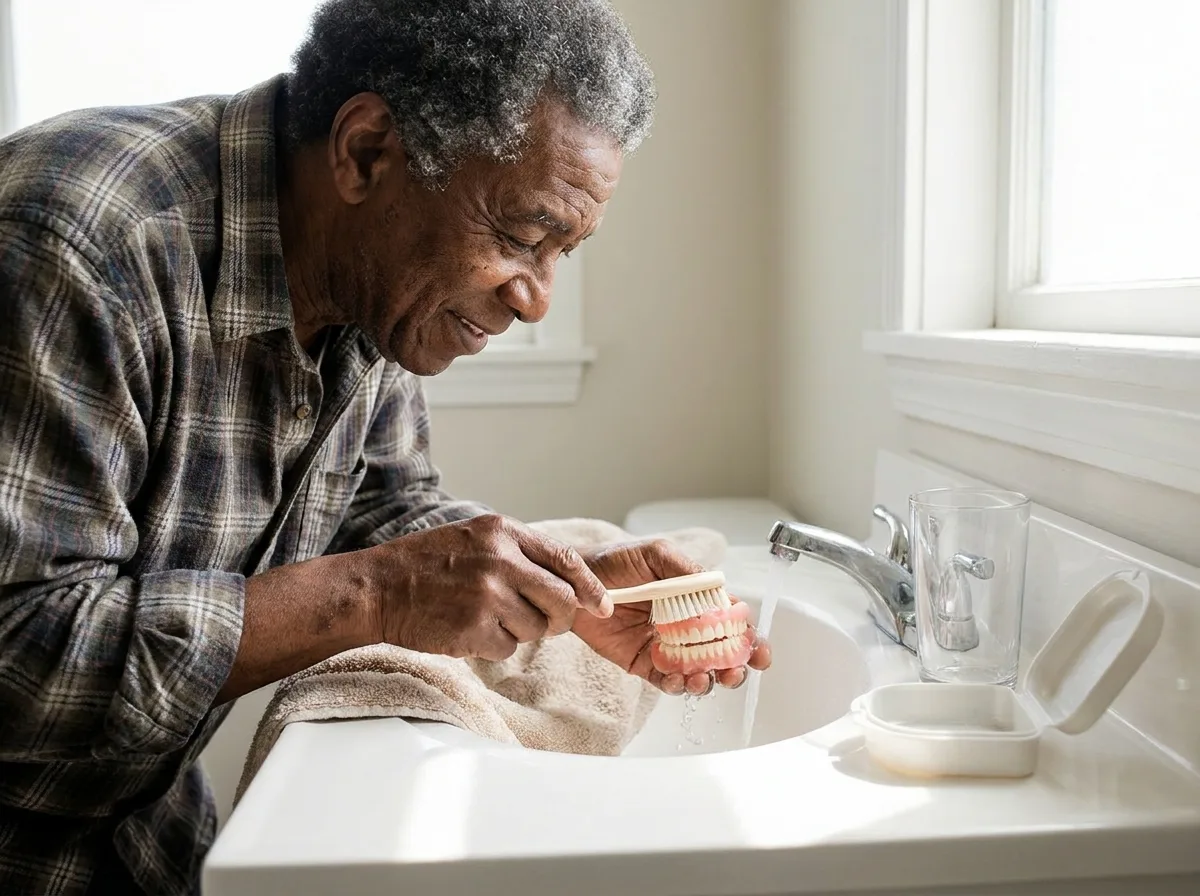
Eating habits matter too. Cut firm foods into smaller pieces and chew on both sides. Our guides on how to eat with dentures and foods to avoid with dentures offer practical ideas, and our article on common denture problems covers other issues that come up.
Helping a parent or family member with denture teeth
If you support an older relative, you may be the one who spots the changes first. Worn or chipped teeth, a clicking sound, food avoided that used to be eaten, or a denture that has been put in a drawer are all worth a gentle conversation. Offer to book a check and to go along if they would like company. Respect their preferences about how their teeth look, because for many people the look of their smile is closely tied to how they feel in front of others.
If getting to a clinic is hard, ask about mobile care. The clinic’s page on mobile denture services describes house calls for people at home, in long-term care or in a retirement residence. Sore spots under a denture can look like more than a wear problem, so see our article on denture stomatitis for signs to watch for. Our guide to denturists and dentists explains who to see for what.
When to see someone rather than wait
Book a visit if a tooth chips or falls out, the denture base cracks, the bite changes, you have a sore or red area under the denture, or the denture no longer feels stable. These are routine issues for a denturist to assess. Seek urgent medical or dental care for significant facial swelling, fever with swelling, uncontrolled bleeding, or trouble breathing or swallowing.
A gentle next step
If you are choosing dentures for the first time, or you wonder whether your current teeth are wearing down, you can ask the clinic about an assessment. Call 647-294-3310 or use the contact page, and you can read about the team on the about us page. Candidacy, materials, timing, cost and coverage all depend on an assessment by a licensed professional, and it is fine to take your time deciding.
Frequently asked questions
What are the different types of denture teeth?
The main types are acrylic resin, composite (hybrid) resin and porcelain. Acrylic is light and easy to adjust, porcelain is harder and wears more slowly in lab tests, and composite sits between them. Your denturist can tell you which options suit your denture type.
Are porcelain or acrylic denture teeth better?
Neither is better for everyone. Porcelain showed better wear resistance in a 2024 lab study, but it is heavier, more brittle and can be harder on natural teeth. Acrylic is lighter, quieter and easier to adjust and repair.
What are denture teeth made of?
Most are made from acrylic resin, composite resin or porcelain, which is a ceramic. They are set in a denture base that is usually acrylic. The exact products vary between manufacturers, so ask your clinic what it uses.
Which denture teeth look the most natural?
Shade, shape, size and arrangement affect the look more than the material alone. A good result usually comes from choosing the shade in natural light, matching the teeth to your face and lip line, and checking the look at a wax try-in.
Do porcelain denture teeth click?
They can. Porcelain is hard, so contact between upper and lower porcelain teeth may make a clicking sound. Resin teeth are generally quieter. If sound would bother you, mention it early so your denturist can plan around it.
Can porcelain denture teeth damage natural teeth?
They can wear natural teeth that bite against them, because porcelain is harder. This is a key reason denturists think carefully about materials for partial dentures. Your own clinician can advise on your bite.
Do acrylic denture teeth wear out faster?
In laboratory testing, acrylic and composite resins wore faster than ceramic. In real life, wear depends on how you chew, whether you grind, what you eat and how you care for the denture, so it varies a great deal from person to person.
How long do denture teeth last?
There is no single answer. It depends on the material, your bite, your habits and how the denture is cared for. Regular checkups let your denturist spot wear early. Our article on how long dentures last explores the topic.
Can a single denture tooth be replaced?
Often a chipped or missing tooth can be repaired, though it depends on the material and the condition of the base. Bring the denture and any pieces to your denturist rather than gluing them yourself.
Can I choose the shade of my denture teeth?
Yes, shade is usually chosen with you from a guide of tooth colours, and many clinics confirm it at a try-in. Tell your denturist if you prefer a softer or brighter look.
Do denture teeth stain?
Surface stains can build up over time, especially if the denture is scratched or not cleaned daily. Gentle cleaning with products made for dentures helps. Avoid abrasive pastes, which can roughen the surface.
Are denture teeth heavy?
Porcelain teeth are heavier than resin teeth, which some wearers notice in an upper denture. Weight is one of the factors to discuss, especially if you have had trouble keeping an upper denture in place.
Do partial dentures use different teeth from full dentures?
The same families of materials are used, but the choice may differ because a partial bites against natural teeth. Ask how your partial will affect the natural teeth around it.
Can implant-supported dentures use porcelain teeth?
Some designs use harder-wearing materials and others use resin. Which is suitable depends on the design and your assessment, so ask the clinician planning your implant-supported denture.
Does the Canadian Dental Care Plan cover dentures?
The plan lists coverage rules and eligibility on the Government of Canada site, and the clinic states that it accepts the plan. Our article on CDCP coverage for dentures explains what the plan lists, and you should confirm your own eligibility before you book.
Can a denturist choose and fit denture teeth?
In Ontario, the College of Denturists of Ontario lists the design, construction, repair, alteration, ordering and fitting of removable dentures as part of the profession’s scope. Other dental treatment sits with a dentist.
When should I see a denturist about my denture teeth?
See a professional if a tooth chips or falls out, the bite feels different, the teeth look flattened, or the denture is loose or sore. Seek urgent care for significant facial swelling, fever with swelling, uncontrolled bleeding, or trouble breathing or swallowing.